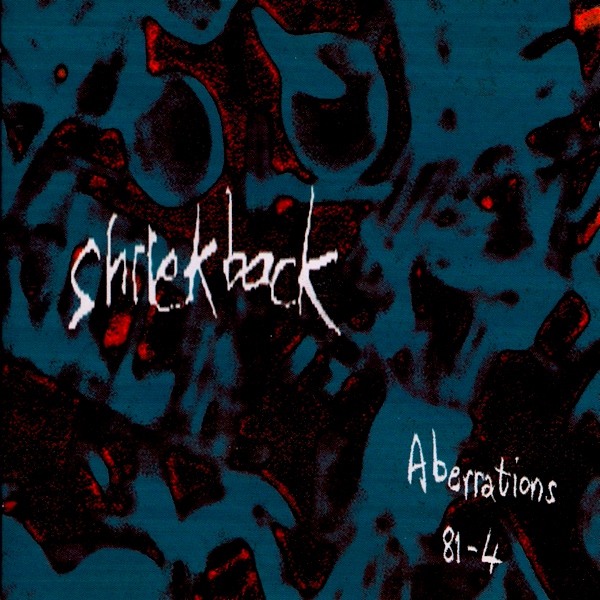
Dave Allen was a foundational Post-Punk bassist with Gang Of Four and Shriekback
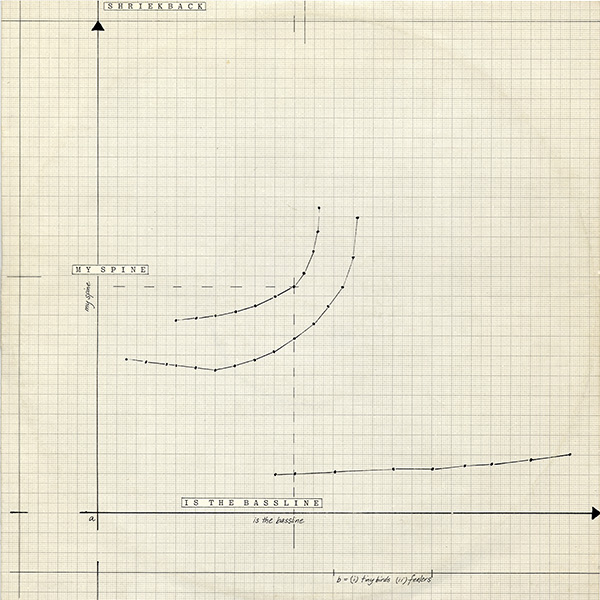
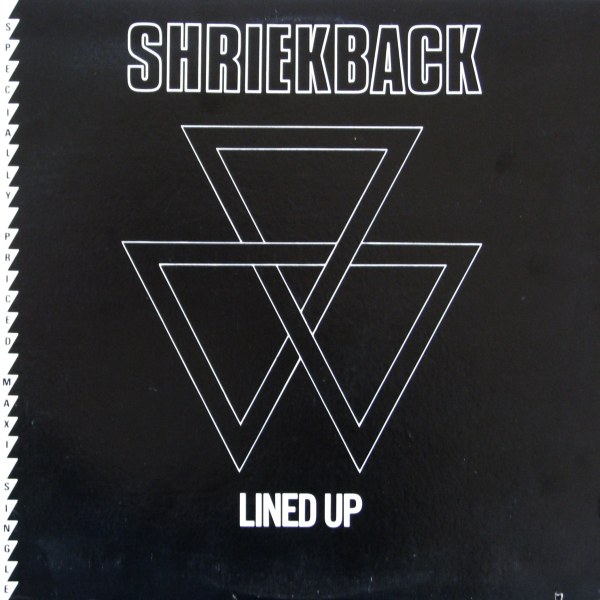
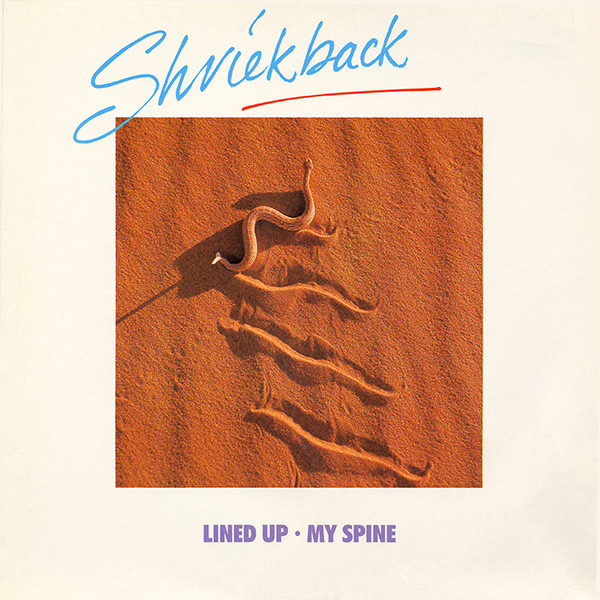
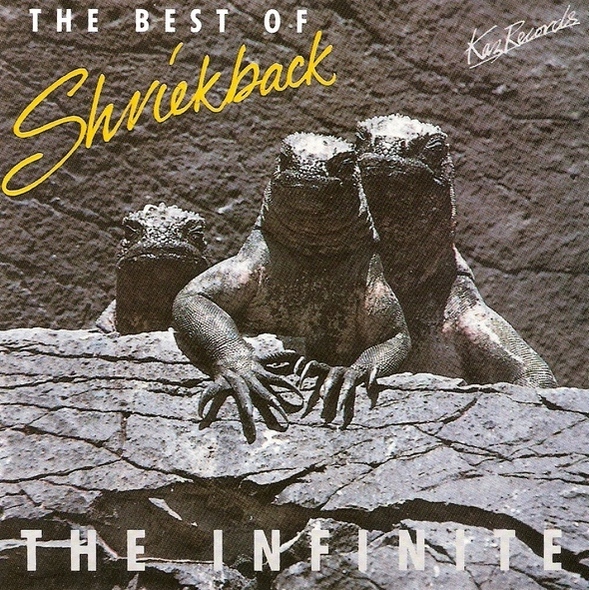
Not 48 hours ago I had the urge to hear Shriekback. Many of you reading this might very well say, “not very surprising, Monk.” And you’d be correct, but that evening I pulled a very specific disc to play: “The Best Of Shriekback – The Infinite.” Because I wanted to hear “Lined Up” and “My Spine Is The Bassline” with the least amount of tarrying. I went about my business then sated only to receive the terrible news yesterday on the Trouser Press forum that the genius behind those sinuous bass lines that were the foundations of the early Shriekback classics had died at the age of 69. Ladies and gentlemen, Mr. Dave Allen has left the building.
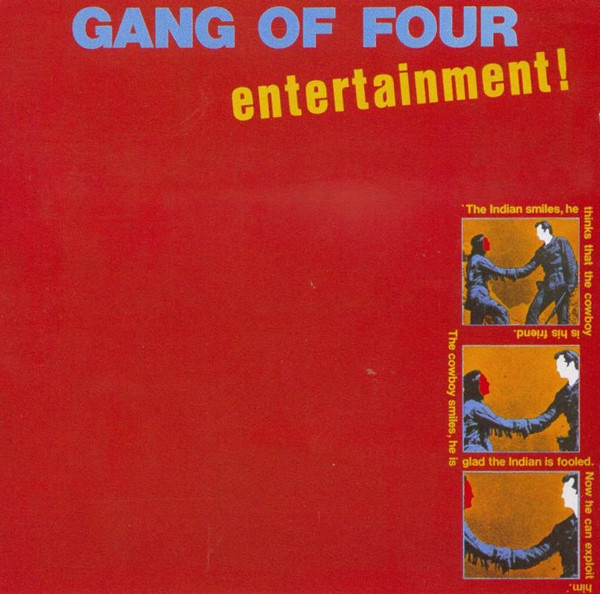
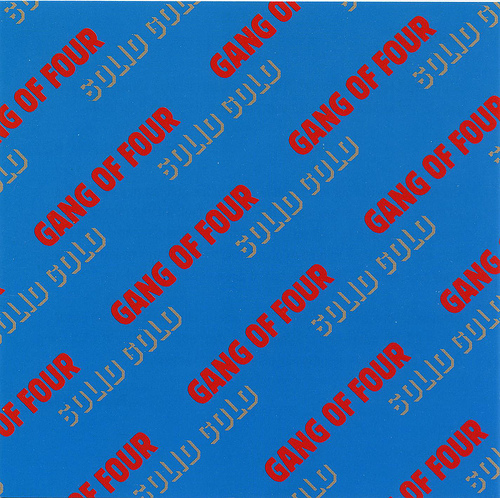
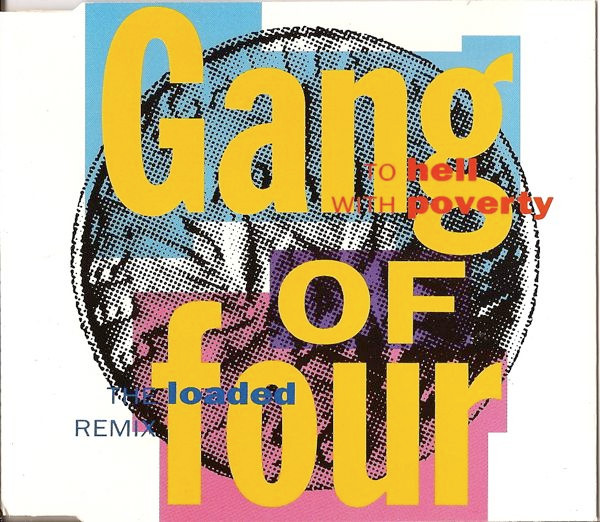
Of course, he first came to our attention on the crucial Gang Of Four releases. Dave Allen roared out of Leeds as the rhythmic underpinning of the first Marxist Funk band to ever manifest. But owing to an encounter with the chilly and foreboding “Anthrax” on college radio, back in the day, I was sadly at arms length to the greater glories of Gang Of Four. I didn’t start buying their material until they were no longer a going concern in the 80s. And it remained until a year ago that I finally bought the mission critical “Entertainment!” after a shameful passage of decades.
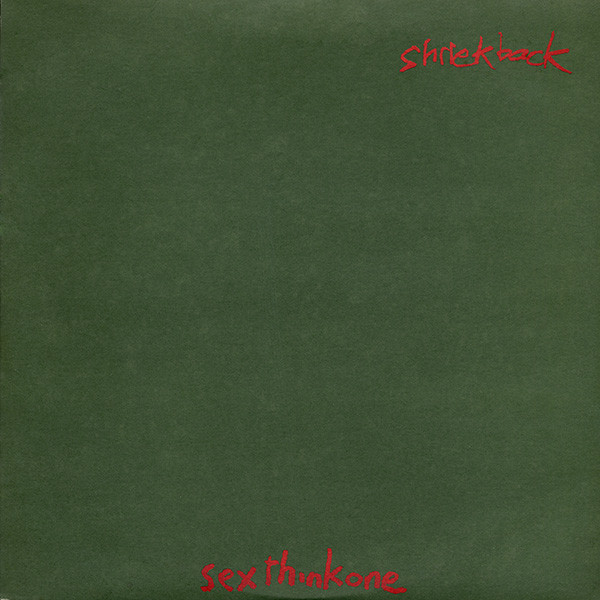
Following his foundational work on the first two GO4 album, Dave Allen left the band in 1981 to form Shriekback with the keyboardist from XTC and the League of Gentlemen, Mr. Barry Andrews. With vocalist/guitarist Carl Marsh from Out On Blue Six and drummer Martyn Barker, Shriekback quickly built a portfolio of dronetrancefunk that was second to none with gargantuan grooves. The songs flew fast and furious and by 1983, I was all in on Shriekback. Tracks like “Lined Up,” “Accretions,” “Sexthinkone,” or the defining “My Spine Is The Bassline” were a masterclass in alternately bracing or flexuous bass lines reeking of intention and dexterity as the band were building a Post-Punk answer to the needs of the dance floor. I challenge anyone to keep their sacroiliac stilled if “My Spine Is The Bassline” comes on the speakers.
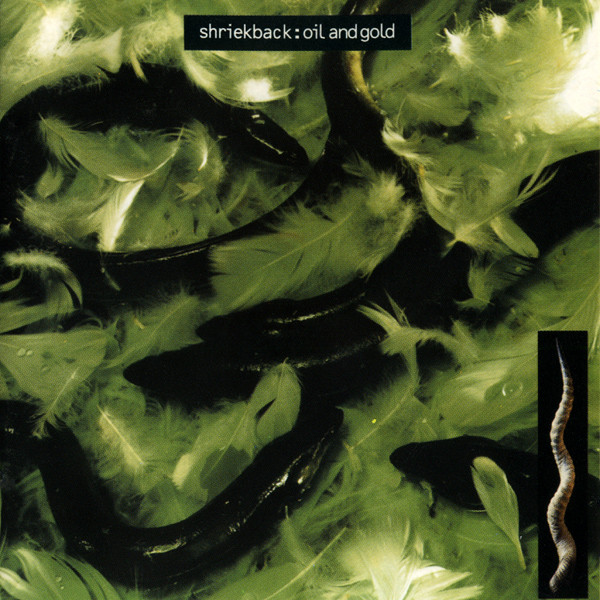
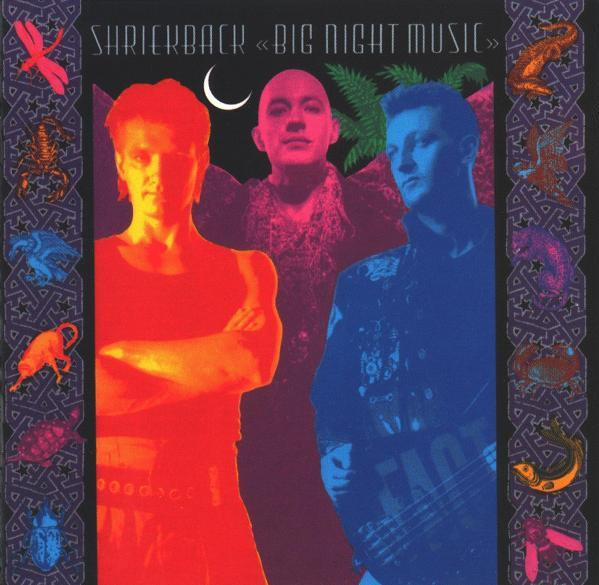
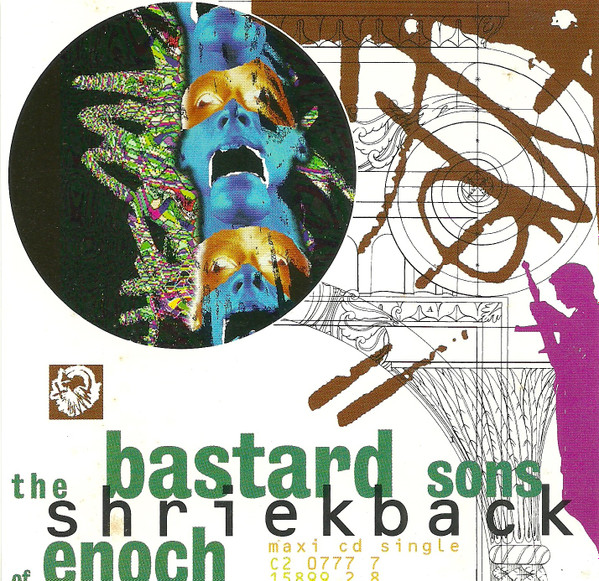
For several years the original quartet built an impressive edifice of grooves, either intoxicatingly dense or spartan in their construction. Culminating in the dizzying plateau that was “Oil + Gold.” I’ll never forget playing that album the first time as I quickly realized that it just might be my favorite thing I’d hear that year in 1985. But as that was released, Carl Marsh opted out of the Shriekback mothership. Leaving Messrs. Andrews, Allen, and Barker to move forward. The resulting “Big Night Music” was a leftward lurch towards the direction of darkly intense beauty and weirdness that served as the capper on Mr. Allen’s first Shriekback tour of duty. He, and also Martyn Barker took their leave to start the band King Swamp. I had to admit that I’d never been convinced by King Swamp. In spite of all of the Shriekback refugees who eventually took shelter there.
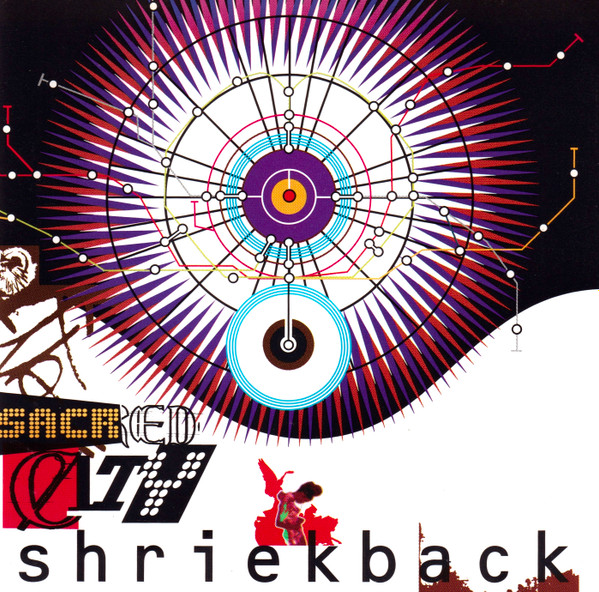
Simultaneous to this period, Allen also started his label World Domination Recordings who had a run with Capitol Records distributing from 1989 to 1996. Also figuring on two of the bands on their roster: Elastic Purejoy and Low Pop Suicide. During all of this Shriekback seemingly exploded following their 1988 album, “Go Bang,” only for the Shrieking mothership to reconvene a few years later with the back to dark basics album “Sacred City” in 1992. Which was released with Allen back in place once more with the album appearing on on the World Dominatiobn Recordings imprint.
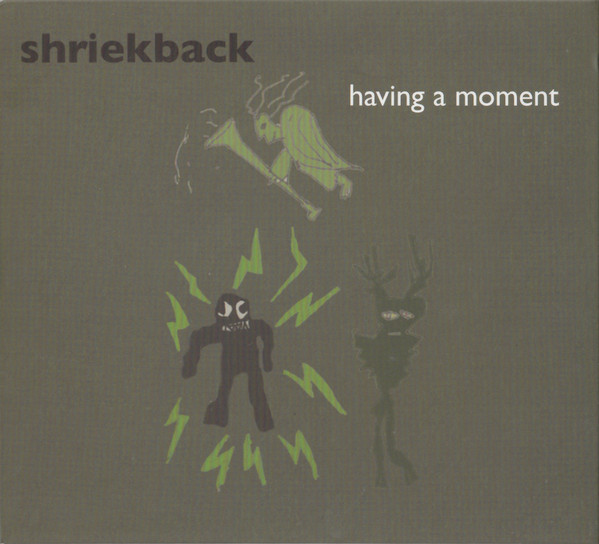
Allen would rejoing Shriekback one more time for the “Having A Moment” EP in 2003 but for the most part, his energies would be on being behind the scenes with a move to the Pacific Northwest coinciding with his blog and label Pampelmoose raising his profile as a non-performer. From there it was a sideways move into Tech with him accepting the Director position at Intel’s Consumer Audio Services division. He eventually joined Beats Music prior to Apple’s acquisition of that company in 2014 and Allen stayed on with the company as they launched Apple Music as an artist relations envoy. From that point onward, barring an internet dustup with David Bryne over the morality of Tech’s streaming music platforms [N.B.: I side with Byrne on this issue], he’s kept his performance profile very close to the ground as he’s been largely a businessperson.
His drumming partner in Gang Of Four, Hugo Burnham, has let us all know that for the last years of his life, Mr. Allen had suffered from early onset dementia. So his death had been a while in the coming and to his friends and family, perhaps this was not as shocking and abrupt as it was to the rest of us. While I’m sure he brought nuance and empathy to his various industry positions you and I know that at the end of the day we wanted to hear this man playing bass guitar. So tonight make sure you pull some Gang Of Four and Shriekback classics for a good bask in the profound bass frequencies that this gentlemen brought to the table. With condolences to his family, friends, and ex-bandmates in this time of their loss.
This certainly came from left field. A completely unexpected development. It’s been seven years since Bryan Ferry‘s last release of songs. At the time I was floored by the “Bitter-Sweet” album he made with the Bryan Ferry Orchestra revisiting songs from his canon in a very different light. Now he’s probed a big step further into the void by collaborating on an album with artist Amelia Barratt providing the words to Ferry’s patented soundscapes.
The two met at an art event and Ferry found himself fascinated with the knowledge that Barratt was moving from visual art into spoken word performance and thereby suggested perhaps a collaboration might be in order? So the new album consisted of Barratt reading her terse fragments of narrative. Ferry has released this on his own Dene Jesmond imprint; home to his material not part and parcel of his current BMG contract.
Dene Jesmond | UK | CD | 2025 | MSRBFABBFCD
Amelia Barratt + Bryan Ferry: Loose Talk – UK – CD [2025]
Big Things 2:46
Stand Near Me 3:41
Florist 5:43
Cowboy Hat 2:51
Demolition 2:49
Orchestra 3:09
Holiday 3:05
Landscape 3:24
Pictures On A Wall 3:34
White Noise 3:05
Loose Talk 3:26
I have to say that at first I was dismissive of this project. A sampling of “Big Things” failed to convince and I was looking askance at Ms. Barratt’s narration. On first blush I thought that she was tentative in her performance, and “tentative” is never a word I’d use to describe The Maestro’s approach to music! So I got on with my life thinking that this might be one of those rare Ferry misfires. Perhaps a half-baked attempt to get some use, any use, from those potential hundreds of unfinished grooves and vibes he’s no doubt got stored in his tape archives.
But when I actually listened to the whole album on Soundcloud having decided to write about it today, something began to click and I dispensed with my previous stance. The music was redolent of everything you may have ever liked about Ferry’s music, not surprising since the whole of his career was said to have been examined for compatible sketches of vibes to for the thrust of the narratives here. A few are so old that they have a lovely patina of tape hiss still discernible, even as the demo tapes were re-worked with Ferry’s crack teams of sidemen crossing the gulf of many years, if not decades, to gave them land here. Portions of the initial recording were still there underneath the finishing work of modern vintage.
The vibes here all say “FERRY” to varying degrees. Some are bold exhortations of his stance. Others are closer to abstract Enoesque ambience. “Stand Near Me” had a callout to Andy MacKay with Ferry’s synth emulating an oboe, tootling away somewhat atonally. “Florist” had ther metronome and Ferry’s piano up front for a sense of perhaps something that had escaped from the “Bride Stripped Bare” sessions. But the second half of the track found room for tremolo organ to dominate the mix.
Elsewhere, Ferry managed to get a little vocal presence in the mix. Though his falsetto expression vocals on “Orchestra” had him at best a ghostly presence in the song. I had to love how the tape hiss was left in; considered part of the overall sound here. As it probably should be!
“Holiday” staked out a claim by bringing the rhythm track to the fore where most of these vibes didn’t bother. With tense rim hits juxtaposed against brushed drums and guitars treated to sound like violins. Perscussion was taken further with a series of metallic ganks figuring like anvil hits in the second half of the track.
Possibly the only time I can ever saw I heard jaw harp in a Ferry album occurred in “Pictures On A Wall,” where tape hiss enhanced the phased keyboards of the track. Making of the music a smudged, impressionistic wisp of sonic vapor. “White Noise” went full on “Another Green World” with tree frog or insect rhythms predominating with the distant sound of a piano reaching the waterline at the reeds.
Finally, the title track was a case of Ferry building a full-on groove. Sounding like a track from any of his last six albums and being a case where the music was too foregrounded to serve as a setting for Ms. Barratt’s spoken word performance. Creating a jarring moment in a project where the interplay between the sonics and the words were more adequately balanced. Perhaps going a step too far this time.
⭐⭐⭐⭐⭐
Rating: 5 out of 5.
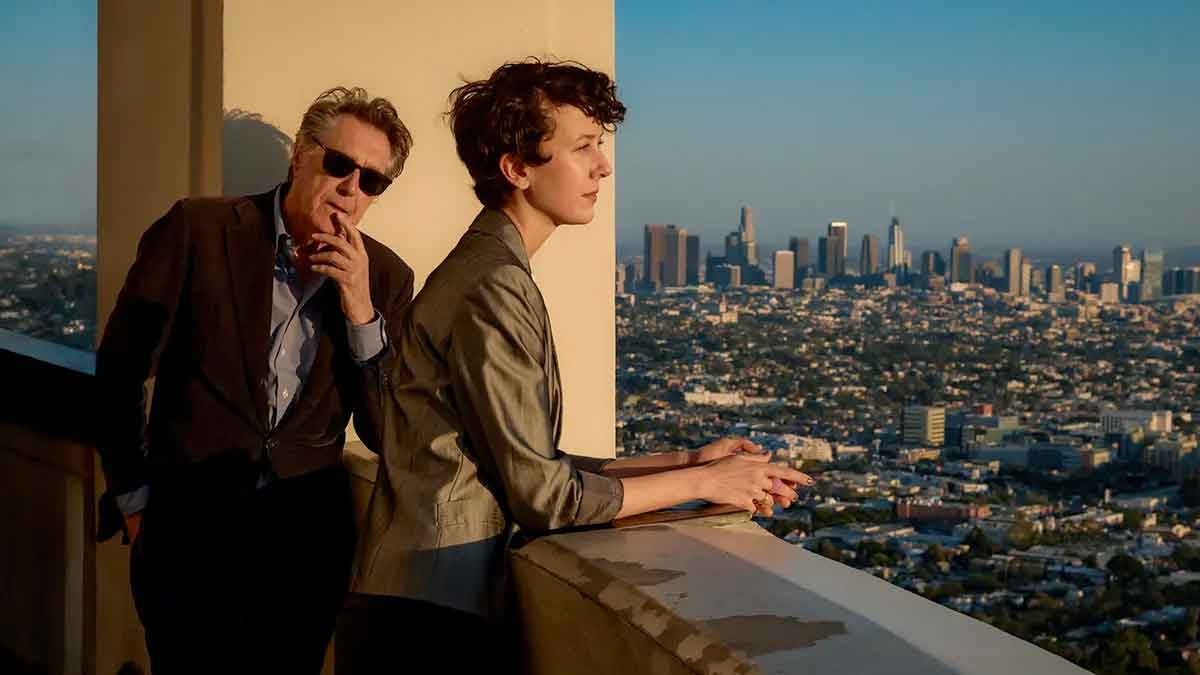
Not much has been mentioned about the texts here as they are tense and minimal sketches of characters and situations that manage to cohere with the themes and vibes of Ferry’s traditional songs. There’s the same hint of insular melancholy that he brings to his vocal work, only with another voice exploring an adjacent set of feelings. I cited Alfred Hitchcock in the press photo at the top of the post, but that’s down to the tonal palette of Albert Sanchez’ photo reminding me or Robert Burks cinematography for the film “Vertigo.” What “Loose Talk” really reminds me of is David Lynch.
This project reminds me of the feel of what David Lynch, Angelo Badalamanti, and Julee Cruise managed to achieve together. Though Barratt and Ferry were on more equal footing here. That Ferry directed the videos for the project only served to heighten that feel. Ferry has referred to this as a Film Noir album, and the cover shot certainly fits within that spectrum.
The narratives can be said to inhabit such a universe with little stretching. The tightly observed details and how they trigger the emotions just below the surface of the words. At first I thought that I would not be interested in listening to this but after enough scrutiny, the sense is that it’s a strong move for Ferry to have stretched his wings and to have stepped out of his comfort [and control] zone to allow this collaboration to flourish as it has. This late in his game, “Loose talk” can be said to be a small triumph of late period growth as he is naturally winding down his body of work with projects that are close to curative in the last decade; albeit with some surprising creative twists that manage to engage this fan.
The official Ferry store has an exclusive transparent green LP exclusive that connects to the design perfectly. $30.99 for the privilege. Black wax for $28.99, and the silver disc for $14.99. I did appreciate how the back cover of the LP completed the vintage 1962 look of the design. Complete with period liner notes! DJ hit that button.
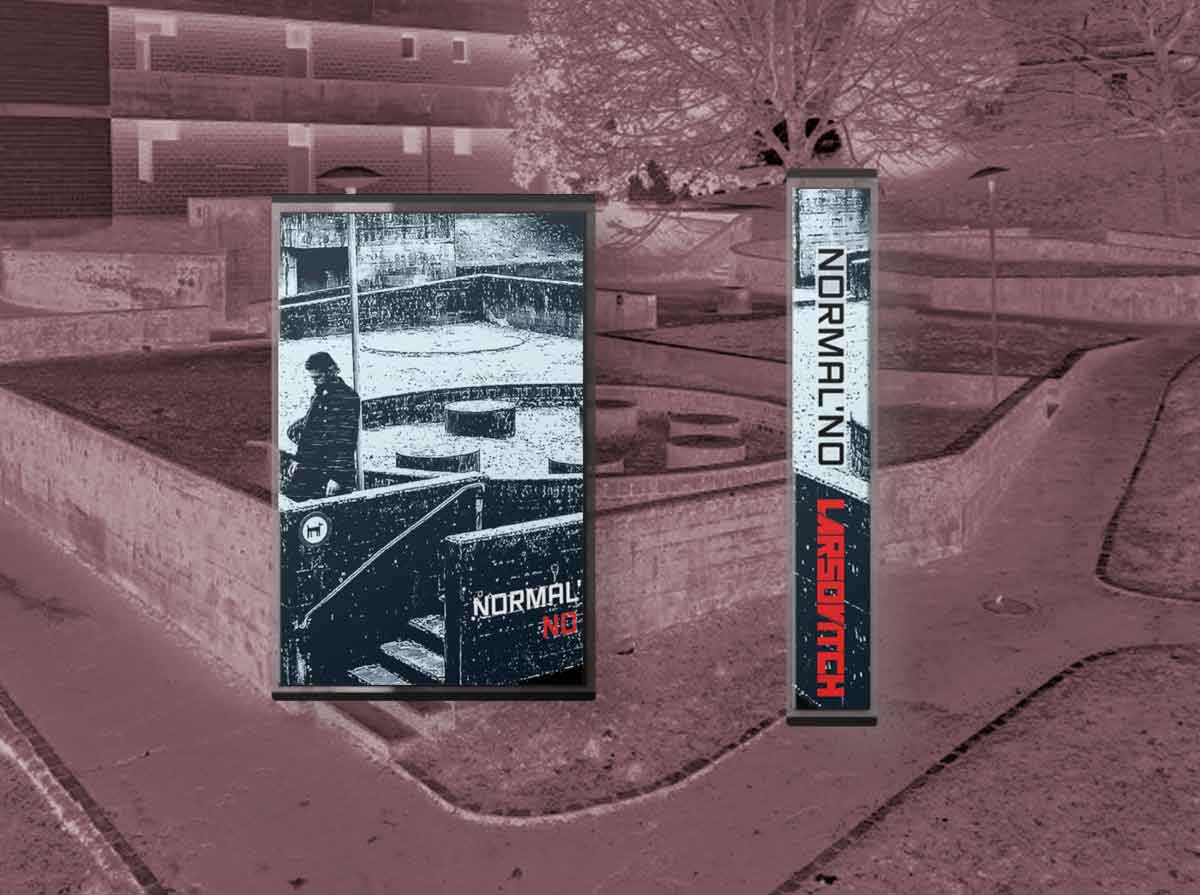
We got a new toy this week at PPM when we got wind of Larsovitch; a mononymous French performer with a new EP out on Bandcamp as well as physical goods on other labels a fortnight ago. Though late to the game, Larsovitch managed to tick nearly all of my boxes.
First of all, he’s French, and I’ve been a Francophile for 39 years.
Secondly, he likes to make music with vintage gear and no computers. While I am not opposed to computers, when used with care and intention, I will agree that they did not make music any better than it was before their ubiquity.
Thirdly, while French, he’s more comfortable singing in Greek and Russian.
This guy almost had my full attention before I pressed “play.” And then I pressed “play!”
Obossrannyi Gueroï (Свидетельство о Смерти cover) 3:29
Kryos Areas 4:00
Normal’No 4:42
Xenomorfos 3:46
“Légions Perdues” had a clean, minimal sound. As if it had been recorded on as many as four but no more than eight tracks. The tremulous synth leads were closer to electric organ patches until the motorik drum machines kicked in. Driving the tune at a relentless pace. Then Larsovitch opened his mouth to sing this first song in French. And it was as if my favorite French singer, Etienne Daho, had leaned further and deeper into Post-Punk far more heavily than he ever did in real time. The Simmons Drum fills in the climax were followed by an abrupt wave of white noise. Making this first track a glorious balm for my ears.
Though we had been prepped for synths up front, the opening “Bonne Nuit”undercut expectation delightfully with the lead taken by the plangent guitar and insistent drum machine. Sure, there was a synth bass pulsing away in there, but it was hanging back. Allowing the guitar to have an effulgent moment in the sun. Here Larsovitch really hit a target that vocally, had that same underplayed melancholy with his sonorous voice which was why I’ve been an Etienne Daho fan for almost 40 years.
With “Obossrannyi Gueroï” he was covering Russian Pop in the native tongue. With an almost winsome and cheerful minimalism in the arrangement. The lead lines came pretty close to the voice of an ocarina. Then “Kryos Aeras” dove deeper into the heart of Post-Punk with the drum machines volleying from channel to channel before the relentless rhythms and tension ticking hi-hats leapt from the starting blocks to jolt the song into starting at full sprint. Larsovitch singing the Greek language balefully, and with a French accent had as much hybrid vigor as I’ve ever heard in a song. Roundly strummed rhythm guitar was as clean and pure sounding as we could ever hope to hear from a six string. The whole track was relentlessly dark with a strong minor key middle eight instrumental section. With the clean hard minimalism assayed throughout, I was shocked at the appearance of a string synth after the middle eight had played out but it was the right move to make here as it added an appealing complexity to the song that thrilled right up to its cold ending.
The title track began as a series of tritones cheerfully scrambling forth at high speed. The amazing facet of this song was that the rhythm began to slowly mutate throughout its running time so that even by the middle of the song it had become something entirely different from how it began. Then it changed even more dramatically as the tempos slowed down to paradoxically increase the pressure of the song. Leading into the drop where Larsovitch unleashed a distant scream before the finality of the electric hum of synths brought the curtain down.
Then the white knuckle thrills of “Xenomorfos” finally remained to wield the bluntest of lyrical axes [in Greek, no less] to excoriate the rise of brutal nationalism and xenophobia in the current geopolitical zeitgeist. It is an electric scream of moral force that shakes the very ground with its righteous rage. This is the song we’ve been waiting for.
Καταραμένες ματωμένες σημαίες γαμημένες χώρες με νεκρά μάτια Καταραμένες ματωμένες σημαίες γαμημένες χώρες με νεκρά μάτια μηχανική ξενophobia μηχανική ξενophobia
“Xenomorfos”
The arc of this EP definitely ended on a note of spirited and harsh defiance but what else would we demand of an EP entitled “Normal’No?” There’s nothing normal about the now so please, sign me up for more missives from the likes of Larsovitch. As for me I’ll be awaiting the next bracing release from Larsovitch with open ears. This could be my EP of the year. The DL is yours for €5.00 with physical product on CD as well as cassette from two other labels. The CD is in reclaimed jewel boxes that already have the patina of years and I think I like it! I’m all about using the music and putting it in the fabric of everyday life. Not trying in vain to hold it in some unnatural perfection bubble for anal-retentive Discogs users to fret over. The CD is €10.00 from Stanze Fredde Records of Italy. Finally, the cassette is €10.00 from France’s Conicle Records. The choice is yours. Do what thou wilt. DJs hit those buttons!
surely not just man-in-the-street Barry Andrews of Shriekback has a few words with The Monk
We’ve been riding the Shriekback train for 42 years now, and my tour of duty with Barry Andrews himself dates back to the 1980 “League Of Gentlemen” for a 45 year run! While I’m open to interviewing anyone of interest within the scope of this site, there’s something to be said for having a discussion with an artist who occupies a lot of space in Ye Olde Record Cell. There was always something about Shriekback, with their distinct artistic POV that always spoke very strongly to me. A vigorous love of language was self evident in the tunes. And the subtext of science, history, and the humanities that added higher cultural frissons to what could often be music aimed at club floors, was entirely welcome and indeed, cherished.
We took the promo of the “Monument” album to our bosom for a few weeks prior to review, and after a suitable period of incubation, eventually probed a little bit beneath its surface for a few questions we were happy to lob to its creator. As revealed below.
⭐⭐⭐⭐⭐
Rating: 5 out of 5.
BUTWE KNOW PLEASURE IS NOT THAT SIMPLE
Post-Punk Monk: Mr. A, Thanks for the opportunity to poke and prod the processes that have gone into the creation of “Monument,” the 18th Shriekback album. One of the scant delights that has occurred for me in the largely heinous 21st century is that I’ve been able to watch the Shriekback shelf in my Record Cell grow beyond belief with the bounty of the tireless march of material, both new and old, that you are seeing fit to record and release. So let me first thank you for your boundless energies in doing so.
Barry Andrews: Very kind of you to say, Monk. And great to hear. The old Tireless March does gets quite tiring sometimes, so it’s helpful.
P: There seems to be a heavy subtext on “Monument” on the conflict between hedonism and its opposite. Pleasure is explicitly noted in some songs while in others, anhedonia figures with equal prominence. I notice this because I’m an anhedonic from way back. [It’s that Monastic strain within me]. Given that in the sybaritic world of Rock, with pleasure always paramount, where does this situate Shriekback on the hedonic scale? Do you trust in Pleasure or is it better to hold it at arms length? To capitulate to or deny its persuasive power?
B: I most definitely do not trust pleasure – it’s lovely of course but, give it an inch… We numb our pain with pleasure, don’t we? That’s how you end up addicted: standard AA shit. I did a sad little tally the other day and worked out I’ve lost eleven friends to addictions of various kinds – most before their 60’s and all but one was a muso. As a deeply addictive personality myself I feel like I’ve dodged plenty of bullets. Mostly through lack of stamina, fortunately enough. I fear that the mortification of the flesh you no doubt practice is probably just the siren Pleasure wearing sack cloth and carrying a flail.
P: Speaking of “Not Designed For Pleasure,” the ironic pull between the heavy rave vibes and the bluntly anhedonic lyric gave lots of frissons of cognitive dissonance. A long-standing Shriekback attribute, which we always appreciate, but one lyric stuck out in particular as fairly reeking of specificity. So I searched on “drizzle me skinny” and found it to be a website full of Weight Watchers®️ recipes! Is its placement in “Not Designed For Pleasure” a side-eyed comment on lo-cal cooking as well as a restatement of the main theme?
B: Well dang ma poons – that is a turn up – I honestly thought I’d invented that phrase (for what could it ever be used for apart from wilfully obscure song lyrics?). This is what happens when one chooses to make one’s mind a sieve for the residue of all human language. I like it. As for the Rave vibes – I had a few grim experiences at Raves – I was a bit too old for them, probably, and the drugs didn’t seem to help. So inhabiting the soul of an anhedonic curmudgeon at the Young People’s Woo Hoo Rave Dance was not a big leap, sorrowful to relate.
WE FEEL LIKE GREEKS, WE FEEL LIKE ROMANS
P: Another leitmotif of the album was the Grecian myth of Ulysses, figuring in both “Ithaka” and “Monument.” Does this relate to the difficulty in finding one’s center or “home?” Especially at this late stage of the game? But could Shriekback ever find contentment in this fallen world? I can’t help but feel that it would be the ending of things for the band.
B: Well, yes, ‘home’ (greek: nostos’ – the root of the word ‘nostalgia’) and the human search for it are very much on the table here. ‘Home’ (as you imply) being maybe a metaphor for one’s true self and being at peace with it. There’s an argument that all of this nativism and tribal identity palaver that’s fucking everything up at the moment is, at heart, a longing for it – to be at home, to belong: to be with one’s People. Horrible things are usually based on perfectly understandable non-horrible things, I reckon. Like pleasure and addiction, now I think of it. The Classical World has much to teach us. Cavafy is ace, also. And too much contentment has never looked like being much of a problem (though I have certainly wished it otherwise).
P: In tracks like “The Curse, “Ithaka,” and “Plumed!” the songs indulge in Shriekback’s well-known penchant for ironic bombast [and especially shouty choruses]; always tempered by an underlying playful anarchy nipping at the heels of the song and effectively puncturing any predilection for pretension. Seeing as you always undercut the vibe lyrically, what is it about that sort of musical form that may have gotten its hooks into you at an early age? Did your mother happen to play recordings of Russian Folk Music as sung by a male chorus when you were in knee-pants? Where does that come from?
B: The mock heroic ironic bombast of which you speak is certainly a Thing isn’t it? I think it’s partly my early exposure to – and indeed resultant obsession with – Gilbert and Sullivan. I loved all that as a kid – (which made me a vulnerably quirky kid in 1960’s UK – ‘who’s your favourite Beatle?’ ‘I don’t know, I’m listening to Iolanthe’. You’d think the bullies of state schools in Swindon (of which there were plenty) would have exacted vengeance for this in the playground but luckily it made me too weird to bother with – the piano playing helped of course – ‘Dance Monkey!’ vibes).
As I mention in the Selected Lyrics books I seem to have a thing for self-aware oddball collectives (‘weird freemasonries’) which the G&S chorus lines always are (‘we are gentlemen of Japan’ ‘we are peers of highest station, paragons of legislation.’ There are cops and pirates, lovesick maidens and dragoons, gondoliers, ghosts, beefeaters – surely there can be Hammerheads, Priests and Cannibals, Shovelheads too..). Also there is musical pragmatism – the blunt instrument that is my voice only does a few things well – shoutathon, football crowd (overdubbed to the max) choruses is one of them.
P: On the massive opener, “The Curse,” you have managed to weave a Post-Punk thread via the synths through the retro Muscle Shoals vibe. Once more, two disparate theses are united in synthesis by Shriekback. Does such dialectical thinking result in the hybrid vigor of your music as a direct or perhaps unconscious goal? How much credit can you give to either intention or surrender in the art?
B: Well that’s probably being nice – Shriekback’s aesthetic has always been a bit of car boot sale of influences (which is good I think – it’s amazing what you can pick up!) plus I found that brass samples have come on by leaps and bounds since I last dabbled in them. I always wanted to be in a brass section since I went with Anto (sax player out the Waterboys) to see him jamming with – 80’s first call brass section – the Kick Horns at a pub in Hornsey in the day. I so wanted to be in their gang. Now the good folks at East West and their splendid LA Brass have made my pathetic dream come true.
P: Given the heavy nature of much of “Monument,” the “hit single” slot [side two, track one] on the album was given to the lightest moment here with “Idiot Dancing.” The four-to-the-floor rhythms and dance step lyrics allow for a glorious epiphany of euphoric stupidity amid the gritted teeth tension of much of the album. Given that Shriekback’s roots are as a dance band, your embrace of Disco energy over the years has been a definite thread…from “Sexthinkone” to “Get Down Tonight.” The latter I approved of, by the way. I must interject here that my friend Mr. Ware’s New Wave cover band [The Pragmatix] actually played the Shriekback version of “Get Down Tonight” [complete with rap!] in their live sets in the early 90s. Will Shriekback ever be to old for the Disco floor?
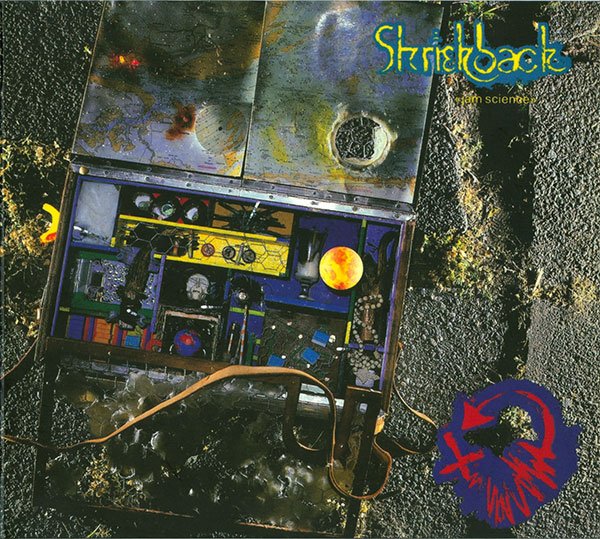
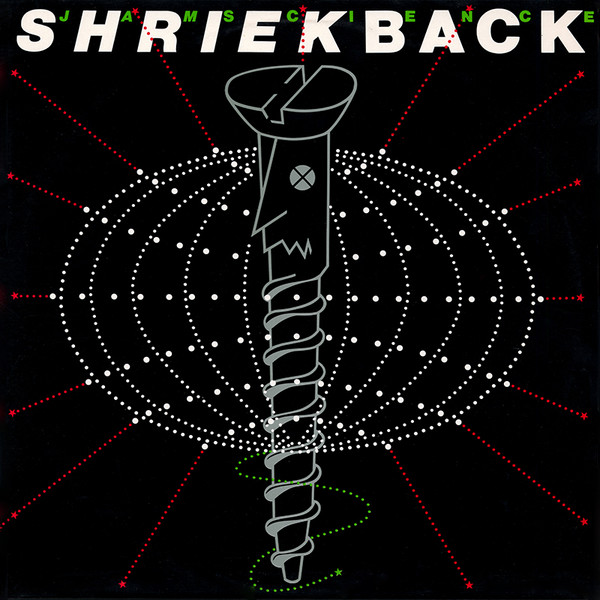
B: Back in this oft-mentioned Day – we Shrieks were all very much of the collective mind that to make music you could actually dance to was the pinnacle of pop music achievement. To make the bodies of other humans move! What could be sexier and more of a compliment to your edgy musical shamanistic skills than that? Well, fine, but, I think, to give no more than a clear-eyed appraisal of what we actually produced, our dancefloor provocations were far from unanswerable. Even Jam Science which Carl rightly describes as our attempt at a ‘resistance-is-futile dance album’ was – er – not really that danceable imo. It’s art rock really isn’t it – played by white rock musicians who’ve listened to a few 12” singles and thrown themselves around drunkenly in some hipster clubs (enough to know what’s supposed to happen). I think it’s an excellent album in its own terms but stick it on next to an ACTUAL dance record and the difference is obvious. My Spine – gets closest to something that compels movement, but – you know ‘Under the Lights’? Achtüng ? maybe some contemporary dancers (Michael Clarke springs to mind) might do some gestural motifs to them but horny, nicely-fucked-up club-goers not so much.
I don’t mind that anymore (mission creep is fine, these days) and I still do like playing around with the form – theoretical dance, if you will – ‘Not Designed..’ being an example. Oh and ‘Put Me To Work’ (from Contaminated Pop). And there’s the old Shriekback ’tinned tomato’ axiom (which is always useful in a tight spot) – ‘they’re not a whole lot like actual fresh tomatoes but they’re still pretty tasty’.
KARMA COULD TAKE US AT ANY MOMENT
P: Right now, the world is isn’t just teetering over a precipice [that’s almost the norm, historically], but leaping bodily into a very dark place. Just when you think it can’t get worse, “they” manage to pull the rug out from underneath us time and time again. Lowering the accepted thresholds in a way that suggests the Overton Window is on a vertical as well as a horizontal axis. You touch upon this throughout the Shriekback canon, most notably on “Monument” here with “Burn Book.” Given that you also paraphrase Henley’s “Invictus” in the memorable coda to “The Curse,” what proportion of Shriekback would you say is dedicated to being artistically reactive to these tragic external stimuli?
B: This is an epochal moment in World History – no exaggeration and no doubt about it. It’s hard to tear your eyes away. It’s unignorable and I resent its overwhelmingess. I resent all the energy it absorbs. As Martin Amis said about nukes: ‘ the man with the gun in his mouth may boast that he no longer thinks about the gun. But he tastes it, all the time.’
P: The vibe to “All My Crude Blunt Tools” was built on an abstract, Yello-esque vocal sample loop rhythm for what seems the first time ever in the long history of Shriekback. Coupled with a hint of Acid Jazz with a Post-modern 60s lounge vibe in the surprising coda. It felt like an outlier to something else in the established Shriek canon. Is there any chance you might explore this musical seam a bit further?
B: Yeah, thanks for noticing. That tune was an experiment that might have found itself on a Stic Basin album but for the necessity to make more Shriekback material. I remember having discovered a little software sampler on Logic that did lots of the things we used to do on Ye Olde Akai S1000 hardware beast (only much easier and better of course) and I thought I’d give it a whirl. The urge to ceaselessly muck about has not, I am glad to report, disappeared yet.
P: So you has a £40K take in crowdfunding for “Monument?” That’s got to be healthy. Thus far all of Shriekback’s crowdfunding campaigns [bar one – the US tour] have been a success. But we’re all getting older. How important is it to bring new blood into the fold so that your mailing list isn’t all gray haired geeks like myself?
B: New fresh faced young Shriek fans eh? yeah that would be great wouldn’t it? Likely though? In a chimp’s cock as the saying goes. I had the conversation often with Mart and Carl – particularly Mart – about how – HOW? – this inevitably diminishing demographic might be expanded but nothing we ever did after my Online Socials Initiative of 2010 (?) (Facebook page, mailing list and the Tumblr blog) ever moved the needle in terms of sales (the numbers swelled then plateaued then remained exactly the same and will probably for all time). My view was always: ‘everybody in the world who wants a Shriekback album now has one’.
Probable scenario: you saw us in Vancouver/Berlin/California in the day/your frat house danced to Nemesis/you saw Manhunter… and you were hooked. Bless you. Decades passed – the enthusiasms of youth receded as Life made its relentless demands but one night you casually Google’d ‘Shriekback’ after a few wines at 2 in the morning (there are no other Shriekbacks so it was simple) you were a bit surprised that we were still going and you got on the mailing list. Then you bought an album. And carried on buying/funding them.That’s it. there are no hidden Shriek fans anymore (not ones who would buy a record anyway). The most graceful attitude, I feel – as with all such diminishing returns in the face of death – is Acceptance.
SOMETIMES WE WOBBLE, SOMETIMES WE’RE STRONG
P: With Martyn Barker and Carl Marsh opting out of the Shriekback Golden Years Parade, does it sit well with you to make all of the creative decisions? Do you miss the artistic head-butting? Are you worried that the Shriekback gene-pool is too shallow to wade in with just yourself making the creative decisions? And finally, at this point would you open the door for any new members to roll into the Hall of the Shrieks?
B: I certainly don’t miss arguing with other old geezers about whether one should add (say) a string sample in the chorus or not. I hate all that. I do miss the Otherness of other people though – when they do things that you never would have thought of by yourself. On balance, though, I like being the director of the movie – it really is hard enough getting something right without having to factor in other people’s opinions, and yet…yet… conflict sometimes produces beautiful things (qv Oil and Gold). Rock bands are odd that way – I don’t at all rule out a return of Barker and Marsh – if they really wanted to do it – but ‘passive commitment’ (as Fripp said to me once) ‘will effect the collapse of a structure’ and that will never do.
I don’t think I’m anywhere near the most talented member (or ex-member) of Shriekback but my superpower is that I really, really CAN BE BOTHERED to do this. And I always have felt like that. If people want to get onboard, great, but these records are going to get made no matter what. ‘My blood is on the land’ …’Here I stand, I can do no other’ … that sort of thing.
P: You’ve been playing guitar for a few years now and I note the surgical inclusions throughout the album. Apart from Mike Tournier of Fluke, who made the music bed for “Wasps In Heaven,” are you making all of the music here or are there guest artistes…beyond Sarah and Wendy Partridge on vocals and Kat Evans’ violin?
B: Surgical Inclusions! Yeah absolutely that – as in grafting the shark cartilage onto the Pomeranian’s head – or like a field amputations during the Napoleonic Wars. My guitar skills are deeply rudimentary but, crudely, simply, get the job done, I think. The music on Monument is – apart from Kat and the Sids and Mike T. on ‘Wasps’ – is all me.
P: So thanks for your time and consideration. The musical nutrients that Shriekback offer the world have long been an important part of my musical diet and I’ve enjoyed the 42 year ride so far…barring “Go Bang!”
B: I know you hate “Go Bang” and I can see why but I would ask for a gentle, monastic forebearance – trying to make money out of music is no crime.
P: Well, I’ve been wanting to revisit that one for some time now [regretting its careless removal from the Record Cell] so that we could dig our heels in for a Shriekback Rock G.P.A. reviewing each album for what would undoubtedly take weeks. And there’s always the expanded DL version in the Shriekback webstore calling me like a siren. So until then, stay frosty, Mr. A!
Is this man designed for pleasure? You be the judge…
A four-to-the-floor disco beat is not the typical Shriekback sonic garb but this was a case of the band making the best ironic dancefloor anthem since Pulp were administering CPR to Handbag. “Idiot Dancing” [hint: a clue] started out simmering like an ambient “I Feel Love.” Once the Partridge sisters joined in, that organ chord drone appeared as the tastefully overstated drum machine fills pummeled us downhill to disco capitulation. The lyric was primarily a ceaseless litany of increasingly unlikely Dance Step Names [Death of Lenin, Sink The Bismarck, etc.] before ending the list with ringers in The Macarena and The YMCA. The mindlessly joyful organ solo in the coda only serving to endorse the song’s thesis.
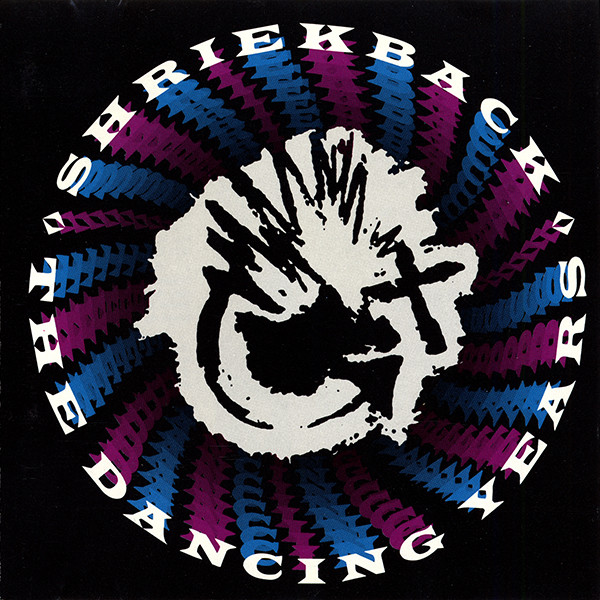
Having just acquiesced to the pleasures of the dancefloor, the album then made a hard 180˚ to the antithesis of that mindset with the brilliant “I Am Not Designed For Pleasure.” This time with a heightened irony that only an extremely decadent Ibiza vibe could deliver to what was the ultimate in anhedonic lyrics! I’d have to go back all the way to “Deeply Lined Up” [a joint exercise with The Sound Marines] from the band’s seeming 1990 swansong, the not at all ironically named “Shriekback: The Dancing Years,” to find something equally ravetastic.
But conspicuous in the lyric was a phrase that jolted me as there was something obviously highly esoteric and intentional about the phrase “Drizzle Me Skinny!” Surely that was one of Andrews’ patented subtle/deep Humanities references? So I did a search on it. Not quite. Now the blogger with WeightWatchers™ recipes will wonder where this odd web traffic is coming from.
All of this was of course, deliberately undermined by the implacable Mr. Andrews as he hit the drop stone cold at the end of every chorus to proclaim “I am not designed for pleasure.” Always delivered as if through clenched teeth [if not sphincter as well]. And I loved the conceit of the raviest thing Shriekback ever committed to hard disk clocking in at well under three minutes as the Partridge Sisters repeated the song’s title in the track’s coda.
Following the back-to-back bangers, it was time for a pivot. The dark heart of the album was revealed with “Burn Book.” The song was the furthest thing from a dramatic statement, musically. An introverted loop eventually got some early 70s Fender Rhodes electric piano for a relaxed Ray Manzarek vibe. But the lyrics helpfully carried the cyanide capsule for us to bite down on.
So many agents of strategy They’re all excited as they can be Watching America drown, the whole thing’s coming down From the cliffs of insanity
“Burn Book”
The energy drifted through this one largely held on the sustained guitar drone from Andrews as he’s been adding guitar to his arsenal of sound. The instrumental middle eight contained tantalizing snatches of dialogue mixed at nearly subliminal levels that I didn’t even notice on my first dozen plays of the album. Alas, now I strain to no avail.
I also strain to dig into the “Night Of the Flowers” reference that closes out each chorus. [“It’s the Night of the Flowers and it goes on for hours”] The most that I can see is that it’s an Italian film from 1972 by Gian Vittorio Baldi about, wait for it, the consequences of unrestrained hedonism! But I can’t see anything in English beyond that brief, one sentence précis. As the song ends with the comforting thought of “we all roll over for the saprophytes” the lyric changed to “it’s the Life of the Flowers” to make its blunt point that we’re all just fodder for fungi.
We received more blunt things in the next song, “All My Crude Blunt Tools.” This one was immediately something different from the Shriekback toolkit. Yello-like rhythmic vocal percussion loops were sampled and manipulated for a techno-chant aesthetic. The synths keening like seagulls in the distance as the sub-bass rumbled ominously. Then the organ that seemed to be the leitmotif for the album added its dated warmth to the rather 90s vibe thus far. The vocal was warm, dry, and right up front from Mr. Andrews with nary an effect slathered on, save for his doubled falsetto. A classic Shriekback gambit.
Then the Fender Rhodes was back for the dead simple keyboard solo in the middle eight as it vied with the organ for an echo of the Doorsy vibe redolent in part two of the album. Pivoting to Soul-Jazz on the introverted verses but blossoming expansively on the exuberant chorus. Allowing Andrews’ guitar sustain to take it to the coda, until surprising, echo-laden synth horn stabs added heretofore unknown space-age Lounge feel to the song. Shocking.
Then the album proffered its title track for the very last cut. The intro groove was deceptively mild and the first verse didn’t rock the boat as Andrews indulged in ever more Grecian references at this cold-eyed look at one’s legacy. Citing Shelley’s “Ozymandias” for the ephemerality of it all.
It’s a very poor thing But this’ll be my monument Some kind of cruel joke But this’ll be my monument Won’t last the year out Get the wrecking gear out Ozymandias and the band, all end up under the sand
“Monument”
The muted verses fairly exploded into raucous life with the famed Shriekback massed chorus. Performed like only they can do. Andrews kicked the door down with a very Proggy solo in the middle eight that was perversely cut short just as we were expecting it to last for possibly 24 bars in a deliberate musical rug pull. Then we got the mordant climax delivered with “Ozymandias, I project, will just get colossally wrecked” with the last two words of the song echoed on repeat so that they scanned like “colossal erect.” And then came a fiery synth solo that ended abruptly with a thoroughly random deadsplice to oblivion. Ending the album with neither a bang nor a whimper.
⭐⭐⭐⭐⭐
Rating: 5 out of 5.
As with every Shriekback album, “Monument” has certain familiar artistic DNA strands that assure a thread of continuity throughout the oeuvre while picking up slightly different new tools to add to the mix. Due to the co-writes with Mike Tournier [Fluke] there’s a dance undercurrent used, ironically of course, on a few of the tracks. Perhaps as a consequence of his expanded responsibilities sans Barker and Marsh, Andrews played his keyboard hand close to the vest, with some organ patches and Fender Rhodes pointing back to his youth more than anything else.
I noted certain themes were used throughout the album. There’s a “pleasure vs its opposite” thread snaking through the album, The sense of defiance that manifested on the preceding “Bowlahoola” has given way to a more nuanced position on the Kübler-Ross scale here. With the concluding title track a mordant blast of self-deprecation. Which must surely follow “acceptance” as the missing 6th step in the grief process that Elizabeth failed to duly note!
Right now the DL has been sent to crowdsource pledgers but the rest of us will get a shot at the silver discs soon at Ye Olde Shriekback webstore. As with all Shriekback modern albums, if you want the physical goods you’d better beat the bushes over there. It’s not in the store yet so it’s probably still in production. So remember to hit that button a few days/weeks into the future. At least it’s not sold out, right? In the meantime, join us tomorrow when we will be discussing the album with Barry Andrews himself.
Anyone who reads this knows that I follow the path of Shriekback rather closely. I consider them one of the intrinsic Post-Punk projects that have been in motion, variously now, for over 44 years. With only one duff album to their credit, I have lots of time for them. I normally get the word out on any activity fans might desire to know about, but last October there was a glitch in the system. I’ve been on the official mailing list for a dog’s age as I buy each CD from the source, and I’ve contributed to every crowdfunding effort. But apparently, last October, the call went out that the band were crowdfunding the 18th Shriekback album during the month that I happened to be living in a climate disaster area with highly problematic electricity/phone/internet bandwidth at that time. So I completely missed out on the siren call, otherwise it would have been duly noted here, as ever!
But just because you didn’t see it here at PPM doesn’t mean that Shriekback have sat idle. The album was made int he fall/winter period for a successful £40,000 crowdfund effort and as on last Monday, has been sent out to any pledgers in download form. As with the last album, this was down to Barry Andrews’ efforts alone. It seems that as Shriekback enter their golden years Carl Marsh and Martyn Barker have sat this one out again. Owing to the “finite time theorum” that will shake up your priorities once you are of a “certain age” [it’s already started with me as I have begun to move away from my music collecting stance] the other two are seeking other outlets right now. Word has it that Marsh is working on a solo project to sit on the shelf with his 1989 solo album that I’ve never seen and the more ubiquitous Happyhead project. We await that with interest, of course.
Of course, Mr. Andrews has plenty of practice at defining the Shriekback artistic P.O.V. He’s driven the project for a long time now and has already successfully recorded the last Shriekback album all by his lonesome. So we know he is capable of doing it. And of course Wendy and Sarah Partridge are here singing BVs to enhance the vibe. So it’s not like it’s some early Prince record. There’s even a track with an entire music bed courtesy of Fluke’s Mike Tournier [gasp]. So let’s get to Shriekback #18, shall we?
Shriekback | UK | CD/DL | 2025
Shriekback: Monument – UK – DL/CD [2025]
The Curse
Ithaka
Wasps In Heaven
Just World Fallacy
Plumed!
Idiot Dancing
Not Designed For Pleasure
Burn Book
All My Crude, Blunt Tools
Monument
The album opens by lobbing “The Curse” at our waiting ears. The sub-rhumba opening featured a very 1971 organ patch before the methodical, medium tempo beat began its deathmarch. Mr. Andrews offered his swaggering vocal while being abetted by the declamatory BVs to fatten things up without adding any sugar to the mix. “Quetzalcoatl made the windows rattle” was a lyric that assured us this was a song from the unique pen of Barry Andrews. We were home now in Shriekland and it was just as comfortably uncomfortable as it had always been.
Andrews middle eight solo played like a pressure cooker on the synth as the grinding organ and mournful touch of harmonica underneath it all kept one foot of the song in The Blues; though The Blues never had reptilian synth bass queasily underpinning the vibe as “The Curse” had here. The climax to the song was left to the ladies singing a lyric interpolated from W.H, Henley’s poem “Invictus” as Andrews cut through the tension of it all with a serrated rhythm guitar lick and the final word going back to the aerated jets of synth spraying out of the song. Unable to be contained lest the pressure build.
“Strait the gate and narrow is the way and black as night from pole to pole Loud and proud and bloody and unbowed and I’m the captain of my soul”
after ‘Invictus’ by W.H. Henley
The next song was another piece reaching to poetry for its inspiration and namesake. This time it was Constantine Cavafy’s piece, “Ithaka.” A musing on the importance of the journey and not the destination, given here an ironic twist by a voice nearing the end of that expedition [a.k.a. one’s life] and wondering what it was all for? Of course, this being Shriekback and not Peggy Lee, we’re treated to a very modest Fender Rhodes electric piano figure that loops for a bar before settling into a pounding waltz time groove given to much Sturm und Drang by Andrew’s commanding chorale. Ramping up the intensity of the synth solo in the climax before the tension filled night of the song was broken by the dawn of the distant peal of bells and harmonica in the coda.
I have to say that I’ve been more than enraptured by the one track here that was a co-write with Mike Tournier of Fluke. Given that Fluke and Shriekback shared management, things like this happen fairly often. But the great experiment failed to gel, leaving a handful of songs as the result of that attempt. This song was one where Andrews was so enamored by the music bed that Tournier had concocted, that he sought and received permission to use it for this album rather than building his own arrangement of the song.
“Wasps In Heaven” was a quintessential Shriekback moment as Mr. Andrews mused over the shrill and vibrating backing track on the presence of wasps in the afterglory. The ability to find even the perfection of His Heaven’s Glory as an unreachable goal was a point of view that only Shriekback would ever proffer! And while the philosophical thrust was both witty and Irreverent, at the end of the day, it all comes down to “it’s got a good beat and I can dance to it,” yeah?
The rhythmic impetus here was crackling with random wave synth energy and Andrews’ vocalizing featured for the first time ever, a pronounced Hip Hop cadence as he deftly dropped the highly syncopated lyrics in and amongst the buzzes and beats. I loved his brash, doubled vocals giving the flow a big push at various points in the song, all leading inexorably, to the hilarious climax that never fails to put a big grin on my face.
The sense of dissatisfaction didn’t stop there as “Just World Fallacy” would prove. The gentle, almost acoustic intro settled into a Bluesy “hambone” cadence with another touch of harmonica in the verses while the chorus structure veered into minor key territory to convey the sense of unease that the title rightly suggested. As the song evaporated near its end, the music bed resolved into a subdued Rave/Trance vibe.
Afro-Cuban rhythms and subtle hints of Hammond organ patches in “Plumed!” almost reached gentle skank status as Andrews and crew delicately wove verses that contained the deathless line “I’m gonna gaze at the mayonnaise and feel nothing at all.” Then the energy rush of the glorious chorus erupted with the force of a sudden solar flare, as the bifurcated structure of the song was now revealed in a delicate balance as the song was both introverted and very extroverted.
The first chorus also notably juggled the essential dynamic of pleasure versus its opposite: the rarely heard word “anhedonia” manifested here most notably! That certainly got my attention. As an elderly anhedonic, I have to thank my lucky stars that I live in the same universe as Barry Andrews as he gives voice to observations that I’m certain I would never hear elsewhere.
The kettle drums and brass patches in the jaunty upbeat sections of the song were full of vivacious energy; settling into a highly cloistered middle eight that made the intro sound brusque in comparison. Then the transition to the climax featured Andrews and the ladies singing the magnificent closing refrain; all but beseeching us to join in at home.
KEEP YOUR SHIT WIRED TIGHT ALL YOU CHILDREN OF THE NIGHT IT’LL ALL BE ALRIGHT WHEN YOU’RE PLUMED IT’S INSANELY BRIGHT SUCH IMPOSSIBLE DELIGHTS IT’S A GLORIOUS SIGHT WHEN YOU’RE PLUMED
Though in 1978-80 I was a dyed-in-the-wool [if not hair] Gary Numan fan, owing to a single playback of “Are ‘Friends’ Electric?” on the what-were-they-thinking FM Rock of the day, I will admit that by 1983 I’d moved on. I was getting my electrowrok from a more potent source via Ultravox and the man himself, John Foxx. The last Numan album I bought at the time was 1982’s “I, Assassin.” Which I thought was okay, but seemed to be in a holding pattern. His album prior to that, “Dance” was a wild attempt to meld JAPAN and Eno into a coherent hybrid that was surprisingly potent. I felt that this was the way forward for Numan. “I, Assassin” was merely him going in a JazzFunk direction. Fun, but less interesting.
But 1983’s Numan album was a deal-breaker. Just the cover of “Warriors” looked risible. “Mad Gary” with an orange spray-tan and baseball bat. And the musical reputation it had was close to being toxic. Producer Bill Nelson actually had his name taken off the finished product! At the time there was no US release but as Numan seemed to be going down the plug-hole, I moved on with my life and bypassed the import LP trying to call my name at Crunchy Armadillo Records.
In 1984, I wasn’t shocked when it transpired that Beggars Banquet cut Numan free and he was a free agent. He then started his own label, Numa Records, and put out the first fruits with “Berserker” in 1984. Again, I saw the import LPs and ignored them as I was hardly listening much to Numan. But in late 1986, an interesting thing occurred. Ultravox, who had kept me much more highly stimulated for five years, put out an album [“U-VOX”] that was way worse than anything I could imagine from Numan. Even with the spray-tan.
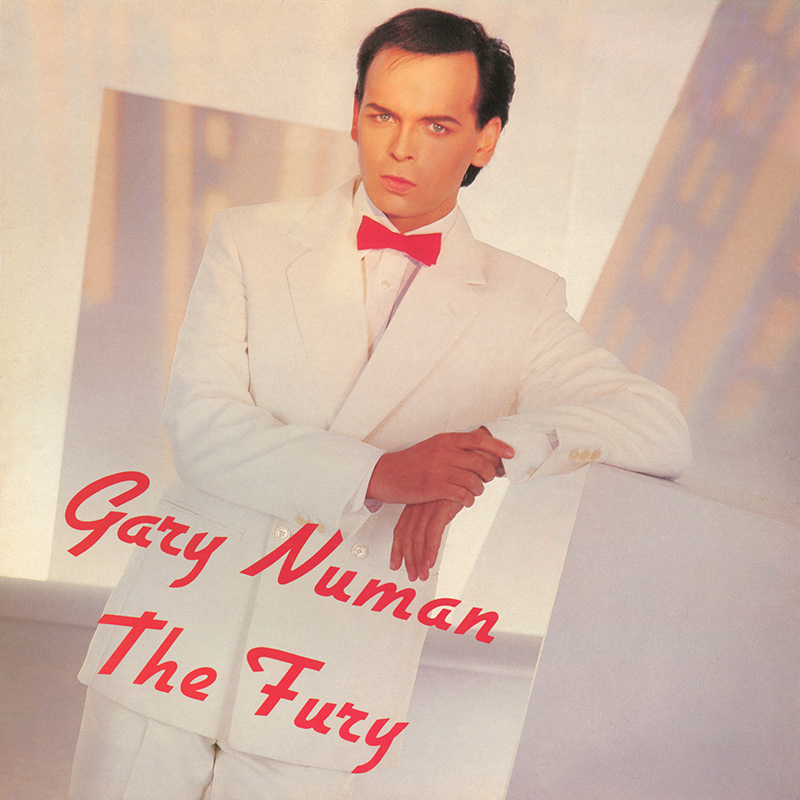
So by 1987, I started thinking maybe I should check out the current Numan album, which was “The Fury.” His second on the Numa imprint. I bought the CD at the very descriptive “Digital Sounds” store that was the only retailer in Central Florida that only stocked CDs and not records. Their import selection was second to none. I took “The Fury” home and was immediately a fan of Numan again. Whatever awkward dry patch he’d gone through, he was now firing on all eight cylinders.
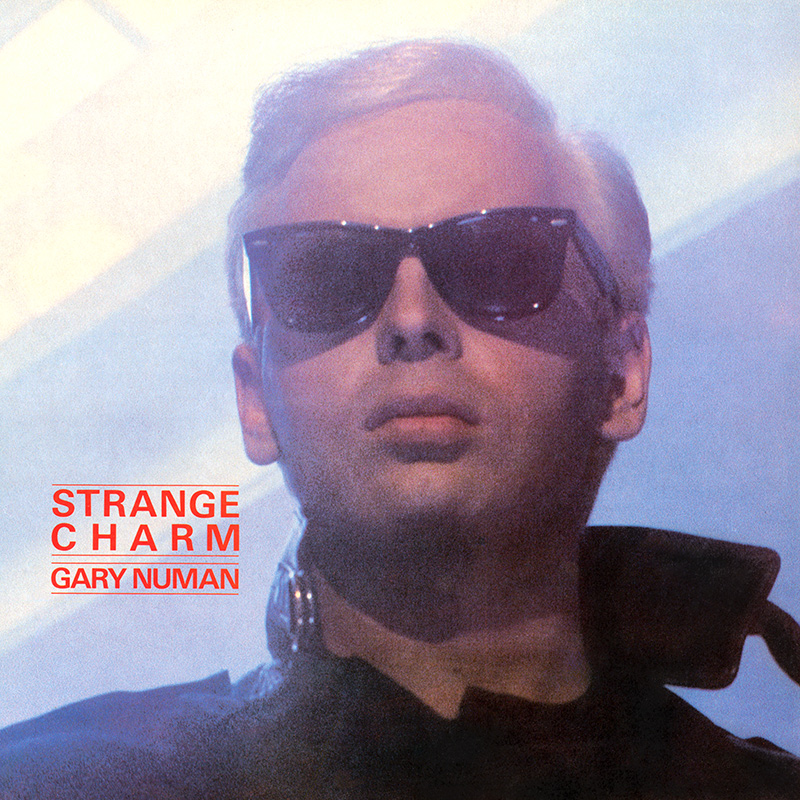
I would have bought the CD of “Berserker” but there wasn’t one…yet. That didn’t happen for several more years. Meanwhile, I was buying each new Numan album and liking them. “Strange Charm” was another big winner. I wouldn’t get “Berserker” until I bought a 5xCD digibook box called “The Numa Years” in 1998 on its release. I thought the album was good. Much stronger than “I, Assassin,” or especially “Warriors.” Which by that time I owned the latter in the Japanese “Asylum” boxes covering his Beggars Banquet era capably. “The Numa Years” had all five Numa studio albums with B-sides and the occasional 12″ mix appended to the programs on each disc. It’s served me well, but now Numan is making [like any legacy act] full boxes of this period’ with “Berserker” currently in pre-order for a 4xCD set.
Numa Records | UK | 4xCD | 2025
Gary Numan: Berserker – UK – 4xCD [2025]
CD1 | Berserker
Berserker
This Is New Love
The Secret
My Dying Machine
Cold Warning
Pump It Up
The God Film
The Child With The Ghost
The Hunter
CD2 | Bonus Tracks
Empty Bed, Empty Heart
Here I Am
She Cries
Rumour
This Ship Comes Apart
Berserker (Extended Mix)
This Is New Love (Extended Mix)
The Secret (Extended Mix)
My Dying Machine (Extended Mix)
Cold Warning (Extended Mix)
The Hunter (Extended Mix)
CD3 | White Noise Disc 1 (Live)
Intro
Berserker
Metal
Me, I Disconnect From You
Remind Me To Smile
Sister Surprise
Music For Chameleons
The Iceman Comes
Cold Warning
Down In The Park
CD4 | White Noise Disc 2 (Live)
This Prison Moon
I Die, You Die
My Dying Machine
Cars
We Take Mystery (To Bed)
We Are Glass
This Is New Love
My Shadow In Vain
Are Friends Electric?
As we see, this wraps up the original album, the non-LP B-sides, the extended versions, and the live album, “White Noise,’ that followed its 1984 release. There were only two 12” singles released from the album, but they were good ones. The title track, and the frankly amazing “My Dying Machine.” If Numan can be said to have a high point in the 80s it may well be that single. Which I’ve never heard in its full length 9:16 mix! The 12″ is on the want list, of course. The other four extended versions here were made of LP tracks for the cassette version of the album that Numa released in 1984. Gary was cannily working every angle. He later issued the album on CD with all extended remixes beginning with the first issue on CD in 1991.
There’s nothing previously unreleased here to spur reticent collectors, but the package was a neat and tidy summation of the entire campaign as released back in 1984-1985 on the label. And the asking price for the CD box is a not bad at all $32.00! If I didn’t already own the album and its B-sides on the silver disc, I might be tempted to be all over this like white on face, er…rice! And that’s taking into account the fact that Numan, for his seemingly dozens of live albums, has never been that compelling of a live phenomenon to me.
If you need the licorice pizza, the 2xLP version has just the album and B-sides across two discs [black!] for a $41.00 price point. But save your shekels. The rest of the Numa Records canon will be getting a similar treatment throughout the year, if the Gary Numan website is to be believed. That means we can look forward to clamshell boxes for the following albums.
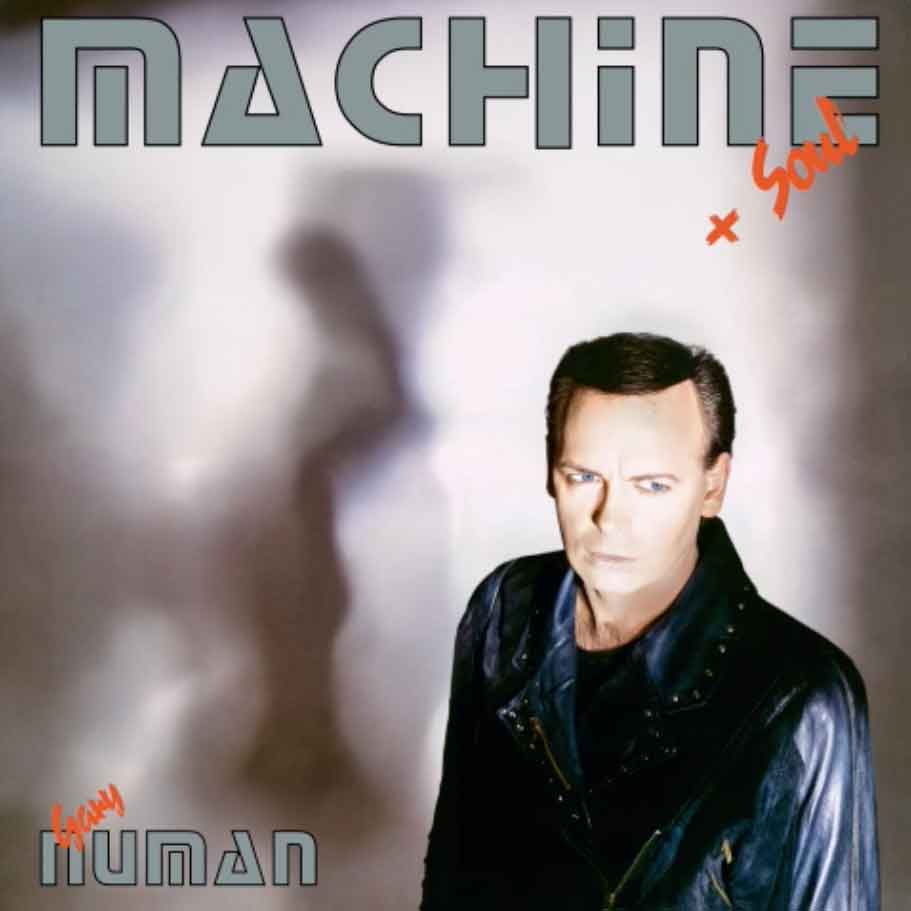
Numan is way down on “Machine + Soul.” Having heard it, I’ve heard much worse. But if I had to have just five Gary Numan albums on a desert island with me, I’m confident I’d pull “The Fury” and “Strange Charm.” Once the contents of those boxes are announced, I may be relaxing my steely resolve. For the rest of you, DJ hit that button!



















![Record Trading Road Trip: Lunchbox Records In Charlotte Gets Another Visit Eight Years Later [Part 2]](https://i0.wp.com/postpunkmonk.com/wp-content/uploads/2025/04/lunchbox-interior.jpg?fit=1200%2C500&ssl=1&resize=200%2C200)
 Post-Punk Monk