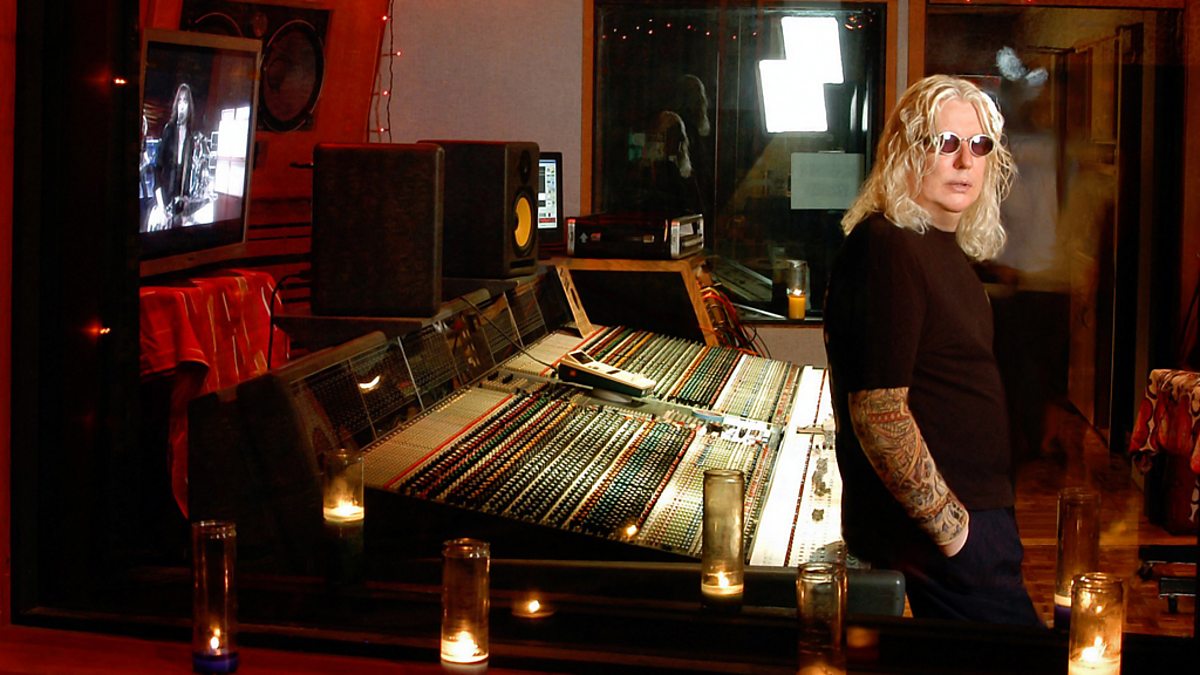
I was all set up last week to discuss the death of famed [if divisive] producer Roy Thomas Baker when the death of David Thomas of Pere Ubu blindsided me. In the cosmic scheme of things, Thomas is a towering artist next to the career of Baker, who stood more for commerce than art. But Baker did have areas of interest in his sprawling career that managed to catch my ear.
When the name Roy Thomas Baker comes to mind, I would guess that the first thing anyone would associate with his name is a record we all know: “Bohemian Rhapsody” by Queen. Many love it, but I am not one of those. I’ve always had a distaste for Queen from my first encounter. That would have been their earlier single “Killer Queen.” Possibly one of the few Glam Rock adjacent hits that managed to cross the pond to America where I was growing up in the mid-70s. It was a prime example of the RTB method of excess laid bare for all the world to hear.
Slave two 24 track boards together. Hell, why not three? Overdub 17 guitars. Stack the vocal harmonies 78 tracks deep. Then run it all through as many phasers and flangers you can legally obtain. Even to my green ears it was a tale told by idiots; full of sound and fury. Signifying nothing. But my god, did it sell. And the next year Baker and Queen managed to make it sound like a wax cylinder next to “Bohemian Rhapsody.” So obviously, Baker had certain predilections which that mid-70s market richly rewarded.
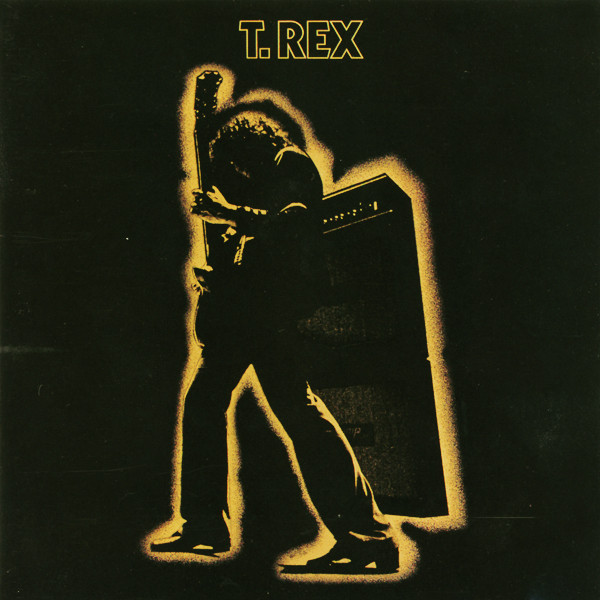
He was obsessed with stacked harmonies. and he had no fear of overdubbing. But where did he come from? Like many in the UK production biz, he come up through the ranks by first being a “tea boy” at the age of 14 at Decca Studios. He eventually began engineering at Trident Studios, who were the first in the UK to have an 8-track desk in 1968. Sessions included the crucial T.Rex “Electric Warrior album,” The earliest example of Baker handiwork in my Record Cell.
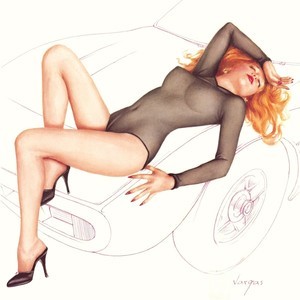
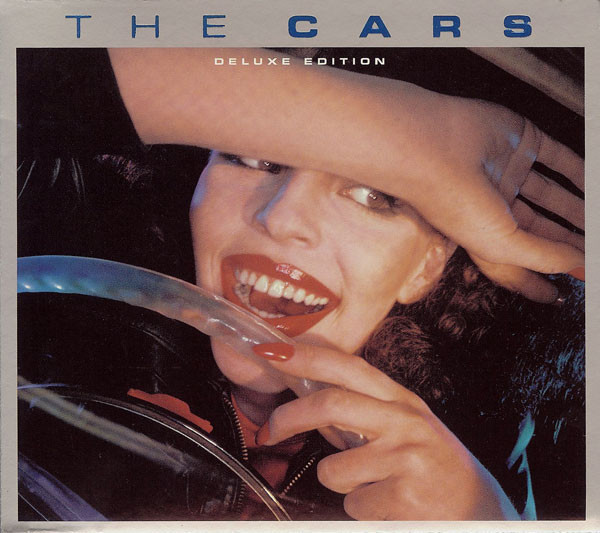
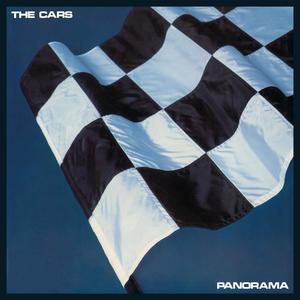
Baker had an interesting ear in that he went all in on the fat bottom and crystalline highs of the EQ spectrum while banishing midrange frequencies to the best of his ability. Truth be told, it probably made the vocal frequencies [which had to be there] pop out more, which could have been the key quality that led to so many radio hits for his work. It certainly fed into the band next to Queen that many would most associate with Roy Thomas Baker. Boston’s New Wave miners of platinum, The Cars.

Baker scouted out the band while doing A+R duties for Elektra Records. Services he provided free of charge to the majors; with quid-pro-quo happening if he could take it up to a signing and subsequent production. On a trip from L.A. to London he stopped over in Massachusetts to catch this band who had a local rep in a blizzard while they were playing to a tiny audience in a high school gym. Convinced, he got them signed and was soon producing their first album. Thinking that this was a band with definite long-term payback potential.
Even Baker himself wasn’t expecting the album to explode on release, but explode it did. I had just started my [short-lived] FM Rock period and AOR stations in Orlando were regularly programming seven of the album’s nine tracks on the FM airwaves heavily. When I listen to the album now it feels jarring when I hear “I’m In Touch With Your World” and “All Mixed Up” because I’ve not heard those two tracks hundreds of times.
His production of the first four Cars albums showed Baker learning new tricks deep into his successful career. The biggest trick was restraint. There’s a 1982 Trouser Press interview where Baker says that he didn’t feel that his typical approach was right for The Cars. But he did cite that when the BVs kick in on “Good Times Roll” there are still 78 stacked human voices…just that once, then they stay off mic. Baker typified that band as needing “staccato notes with air in between them.” That sense of space allowed The Cars to establish their presence effectively, and if anyone has heard the DLX RM of “The Cars,” it had a second disc with almost the complete album in demo form and The Cars knew exactly what they wanted. Baker had the insight to simply get it powerfully recorded with a little spritzing of his penchant for harmonies and nature took its course.
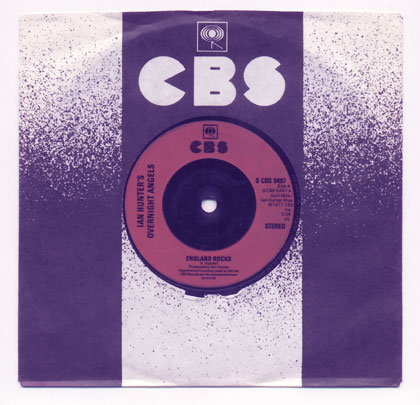
Baker’s tour of duty with Ian Hunter was nowhere near as effective. But in the case of 1977’s “Overnight Angels,” he was playing by the established Baker rulebook of the time. If anyone ever wanted to hear an Ian Hunter album that sounded just like Queen, then be my guest! It’s filled with phased guitars. Phased drums. Even phased vocals! Guitarist Earl Slick was the square peg here jammed into a round, Brian May-shaped hole. The album famously was only released in the UK and Columbia dropped Hunter after it bombed. I waited decades to hear it and only ever bought a copy in 2018. To my chagrin. Baker also produced the “Wild N’Free” B-side of the non-LP single “England Rocks” which would get a makeover on the subsequent Hunter album as “Cleveland Rocks.” I still need to play this 7″er having bought it over a decade ago, so I can’t say any more than that.
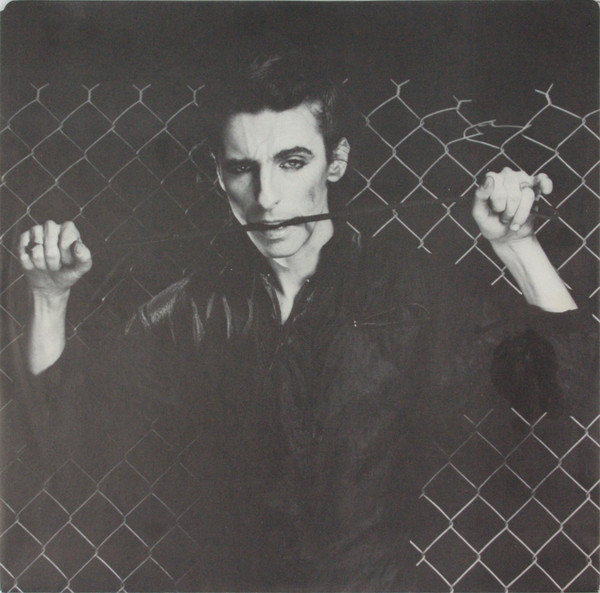
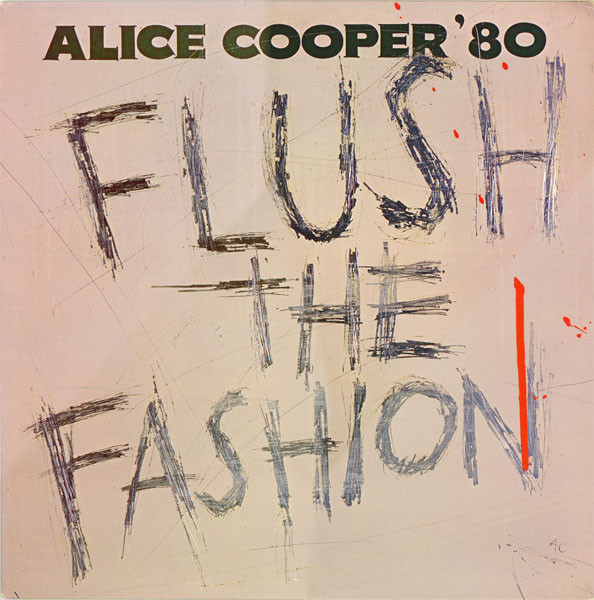
There’s a Roy Thomas Baker album from 1980 I have in the Record Cell but have never played [fully] for the most obscure of reasons, but the one track I have played was the proverbial lightning in a bottle! The artist? Alice Cooper. The album? “Flush The Fashion!” The reason? “Clones [We’re All]” was such a resounding triumph of False New Wave that I have been intimidated for the subsequent 45 years to even begin to play the other nine tracks on the album! Now that he’s gone, I owe it to him to see if he was able to work that Baker magic on the rest of the album. If so…wow!
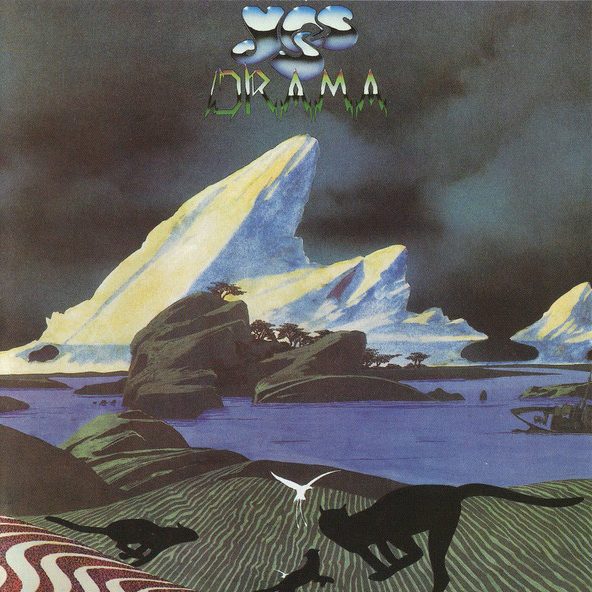
Baker was friends with the band Yes and actually produced the Paris Sessions before the band famously exploded and allowed Trevor Horn and Geoff Downes to join the group for their then divisive, now lauded “Drama” album. I always loved it. Still do! The DLX RM of that CD contained the Baker productions but as they are of the post-“Tormato,” pre-“Drama” lineup of the band [complete with Jon Anderson on vocals] they are for Yes collectors only.
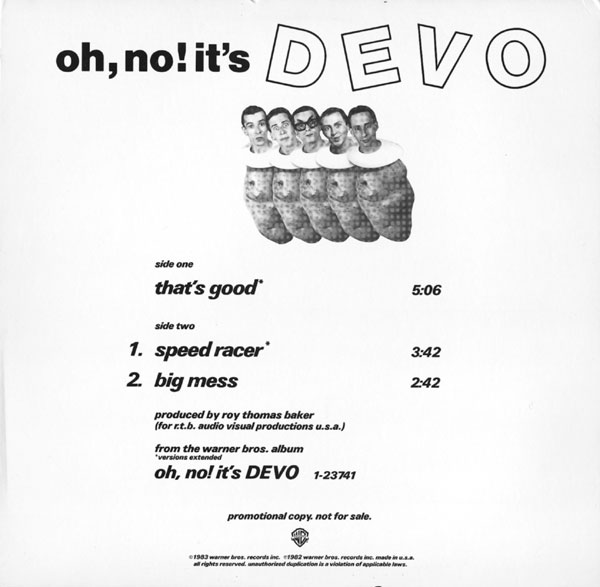
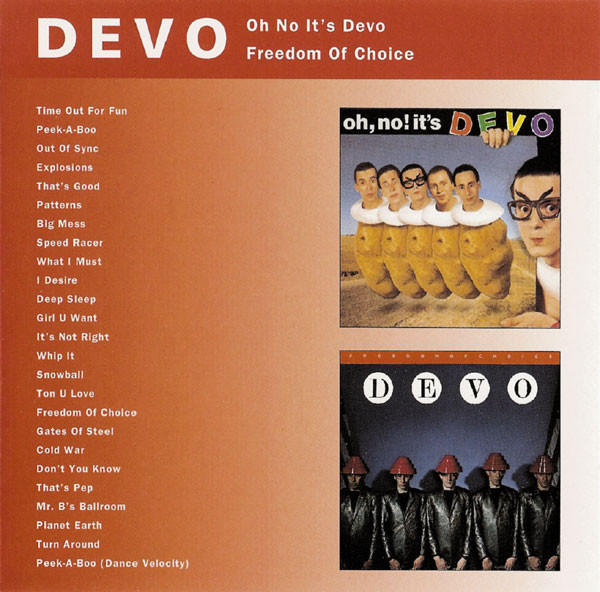
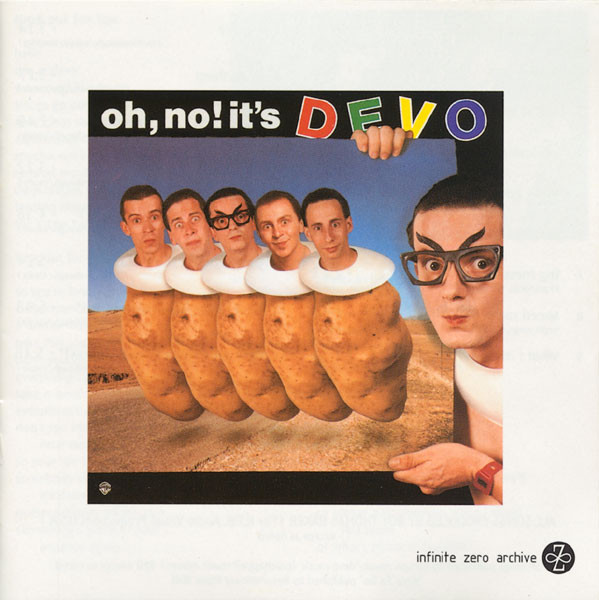
More successful was his production of the last “imperial period” DEVO album, “Oh No, It’s DEVO!” These were the last near-hits the band would have under his guidance and quite frankly, their sound might have been influenced by Baker’s penchant for excising the midrange from the get-go. That DEVO album plays like a more synthetic Cars variation and is probably an example of the band and producer meeting on equal terms. Hell, You might even say that there’s only a thin line between the vocal approach of Ric Ocasek and Mark Mothersbaugh. So whoever thought to get Baker to produce that album was probably thinking logically. And to his credit, Baker didn’t blanch when DEVO pushed for including a song [“I Desire”] with lyrics adapted from a John Hinckley, Jr. poem in the album’s running order.
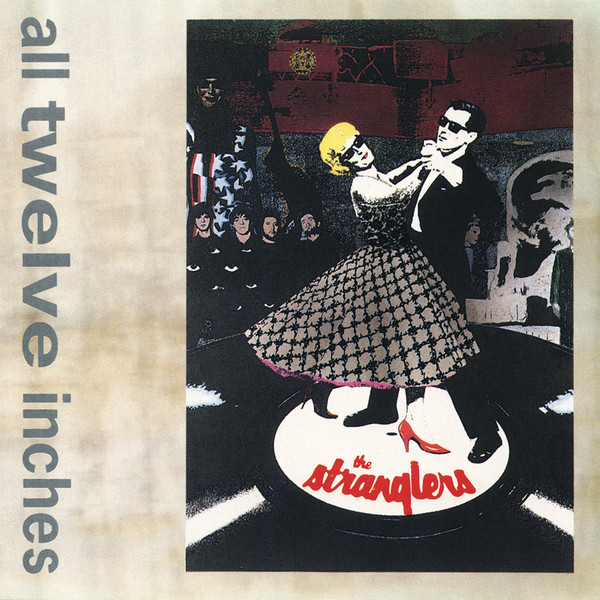
Following that, the last time I have any RTB in my Record Cell was for the tenth [also divisive] album by The Stranglers. The out-of-creative gas example of their “10” album. As if one couldn’t tell by the title alone. Thought I have the entire run of the band with Hugh Cornwell, this period is on the chopping block as there was a clear lack of inspiration throughout the project. It does have an amazing cover, though.
Like any producer, Roy Thomas Baker’s fortunes were tied closely to the bands he produced. These could be ghastly to me because of the band themselves. See: Queen. Foreigner. Journey. They could be ghastly due to any number of reasons [fire, injury, mayhem, songwriting] like “Overnight Angels.” Or they could be triumphs of art and commerce like The Cars, DEVO, and Alice Cooper! It bears mentioning that there are some RTB productions that I’m still gunning to include even in the Incredible Shrinking Record Cell™. Albums like the only Be Bop Deluxe release I lack, “Futurama,” or that first Hilly Michaels album, “Calling All Girls!”
I can’t be completely impressed with the oeuvre of Roy Thomas Baker, but then again, neither was the man himself. Quoth RTB: “I’m a better cook than record producer!” Let’s be thankful he produced a few lofty souffles we can all enjoy. No matter where our tastes lie. Condolences to his family, friends and all of the musicians who’ve looked at the man behind the glass in the control room.




-30-













![Record Trading Road Trip: Lunchbox Records In Charlotte Gets Another Visit Eight Years Later [Part 2]](https://i0.wp.com/postpunkmonk.com/wp-content/uploads/2025/04/lunchbox-interior.jpg?fit=1200%2C500&ssl=1&resize=200%2C200)

 Post-Punk Monk