
[…continued from last post]
By 1983 the members from Ultavox and Magazine; ostensibly the raison d’etre of the collective band were long gone. A desire for management change saw Rusty Egan and Steve Strange break ties with Morrison/O’Donnell [who also managed Ure and Currie] and they spent over a year tied up in court unable to record. It was during this period that “Fade To Grey: The Singles Collection” was released in both regular and a special dance mix issue.
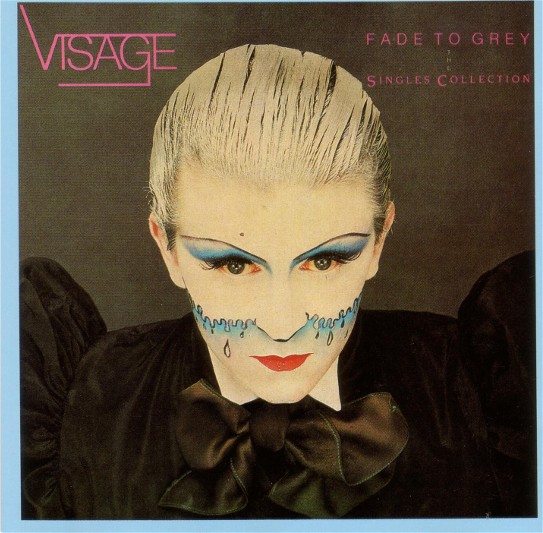
At the time it appeared, I was a little taken aback by “Fade To Grey: The Singles’ Collection.” In 1983, none of us knew anything about the behind the scenes machinations with the band and just bought the records. Realizing that four members had opted out of the project by 1982. Having just a two album arc anthologized seemed to be a little unusual at the time, but I was a fan. I eagerly snapped this up! Of course, there was the early demo of “In The Year 2525” added that fans absolutely did not have. Elsewhere, single and extended mixes were used to keep the collection different for fans with the earlier albums.
I had no idea in 1983, but many years later I found out about the Dance Mix Album variant as shown at right made for this album in a limited edition. One more track was added to the first side; the legendary German-language mix of “The Anvil” as “Der Amboss.” And the mixes on each side were segued together [much like the first Visage album, really] for maximum dancefloor potential. As such there were mix differences throughout the album in the “red sleeve” copy as compared to the original “blue sleeve” copy. Once I found out about this on the internet, I spent about 8-10 years trying to source one and eventually did in the early 21st century.
Drummer Rusty Egan had worked with some interesting guys on a smoking hot Nona Hendryx record during the 1982 downtime for Visage. He found fresh blood in the Barnacle Brothers; Steve on bass and synths, and Gary on saxes. A new guitarist was picked with Andy Barnett being chosen from Corey Hart’s band who had just broken through with “Sunglasses At Night.
Meanwhile, the UK Pop scene was undergoing a metamorphosis from the New Romantic period; now fully over. Frankie Goes To Hollywood were the new kings. Digital sampling was the latest thing and Trevor Horn and ZTT were making the records that cowed the masses with their technological acumen. At the same time, stadium rock was poised to return at any minute, as Live Aid showed by 1985.
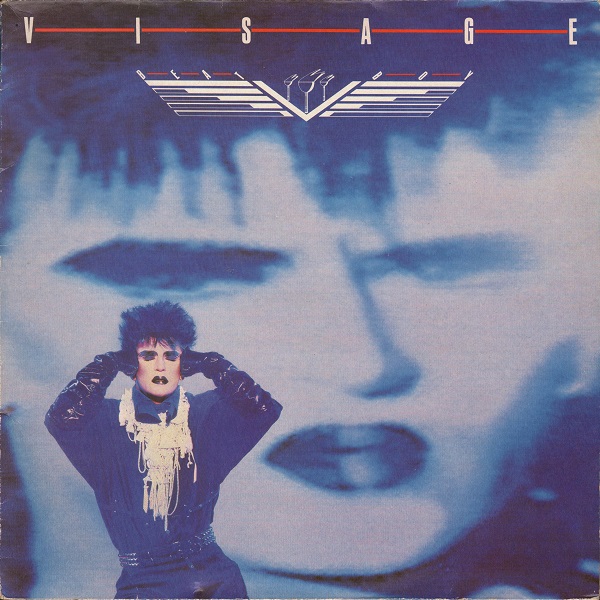
The singles collection album had liner notes claiming that Visage’s number wasn’t up yet, and Rusty Egan vowed that if Visage was going to be a band, “it is gonna be a real band.” The first hint of the new sound of Visage was when Debut Magazine number five included a 3:40 mix of the title track, “Beat Boy.” This was a fully sample-based recording with fat sequencers overlaid with industrial sounds and to top it off, squealing rock guitar. The tone of Andy Barnett’s playing slotted in close to the metal spectrum even as the previous Visage album, “The Anvil,” had downplayed the importance of guitar from the debut album. This new sound amped the guitar in the mix to much higher levels. This was matched by Egan compensating with a dive deep into the Fairlight Page R bucket. Egan was unconvinced by the proposed first single “Love Glove.” He thought that the sample heavy “Beat Boy” was the light at the end of the tunnel. He managed to make numerous mixes of this on the Fairlight. In the end, the market disagreed, and only the “Love Glove” single charted… at the lower reaches of the charts. “Beat Boy” didn’t even do that much business, becoming the final contiguous Visage single for many long years.
A cursory glance at the UK “Beat Boy” cover as depicted above shows maybe another problem that Visage were having. In a late 1984 album, the over-the-top image that Strange was putting forth on the cover of “Beat Boy” was increasingly at odds with the more conservative High-Thatcher era of Clause 28 and the subsequent dampening of queer-friendly Pop images of people like Steve Strange. 1984 was a year when when mullets, fluorescent sporting gear, and shoulder pads were becoming de riguer. A heavily made up and feminized Steve Strange was no longer at the center of the zeitgeist.
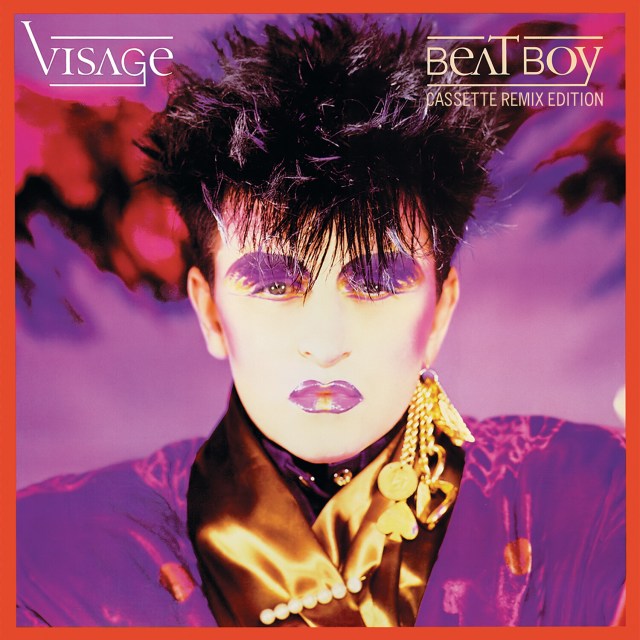
The “Beat Boy” album was given one luxury as it was sent out into an uncaring world. The cassette version in the UK was another remixed “dance mix” production similar to the tape version of the previous album, “Fade To Grey: The Singles Collection.” The new songs were already fairly long so the remixes here were slightly changed instead of radical overhauls. The songs were not as tightly segued as they were in the last Dance Mix album outing, but there was still no dead air in between the tracks, and there was one bonus: a reprise of “Questions” at the end of the program.
At the time I was less than floored by “Beat Boy” and felt it was the point where Visage had lost too much of the artistic DNA that the original band had brought to their game and had floundered as a result. Much of this was down to a single track, “Casualty” which has Barnett singing one of the verses and sounding like Rod “The Mod” Stewart while shredding on his axe while the backing vocalists were laying it on thickly like Soul Queens. It was miles away from the foundational Visage vibe and another example at the time of a band I had liked five years earlier, that seemed lost in the mid-80s like so many others. After all, if David Bowie himself was flailing artistically, [see: “Let’s Dance” – “Never Let Me Down”] there was a problem all over.
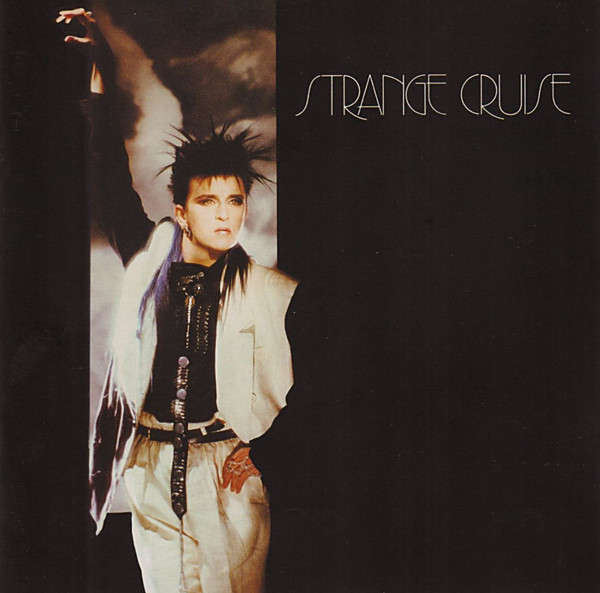
It was two years later when Steve Strange next surfaced in a project I recall reading about in my friend’s copies of Smash Hits magazine that she subscribed to via Air Mail! Strange Cruise had Steve jumping ship from Polydor to UK EMI for this none-more-mid-80s project with Steve and Gary Barnacle once more involved, and with their brother Pete on drums for a complete set. Wendy Wu, late of New Wave popsters The Photos was also singing but the album was difficult to buy in America.
All I ever found was a 12″ single of the first single “Rebel Blue Rocker,” and that’s all I had for decades. It was just a few years ago when I managed to obtain the second 7″; a cover of the Sonny + Cher chestnut “The Beat Goes On!” Then that was swiftly followed by a CD of the reissue of “Strange Cruise” that a kind reader had two copies of and sent one my way. Hearing it all over 35 years later was astonishing to my ears. And not in a good way. This was yet another example of what I called the “Mid-80s Malaise,” where musicians I had relied on in the late 70s/early 80s had found themselves floundering 5-7 years afterward.
Next: …The Wilderness Years







![Rock GPA: Ultravox - Quartet [part 6]](https://i0.wp.com/postpunkmonk.com/wp-content/uploads/2012/06/ultravox-quartetuklpa.jpg?resize=200%2C200&ssl=1)
 Post-Punk Monk
A very minor correction, in 1983 Steve and Rusty were not unable to record due to court proceedings but decided not to release any new music until they had removed themselves from the contract with their management, or the management would have control over it. They were still able to record and did so. The vast majority of Beat Boy was written and recorded in 1983, as is proved by the 1983 BBC radio session of Can You Hear Me, Only The Good Die Young, Questions and The Promise.
LikeLiked by 1 person