Steve Harrington was a Welsh music fan swept up in the drama of Punk Rock sweeping across the UK, even in relatively quiet and bucolic Wales. Seeing the Sex Pistols in 1976 lit a fire, and he was soon booking Punk gigs in his town of Caerphilly and after making a connection with J.J. Burnel of The Stranglers, Steve moved to London to seek his fortune. His first attempt was the bad taste bomb of the band Moors Murderers. Who lasted nearly a year as a concept despite them being little more than Punk provocation personified. Next came a New Wave band, The Photons, who had some overlap with Moors Murderers. Their guitarist had known of Steve and when their vocalist departed, Strange was given his chance at the mic.
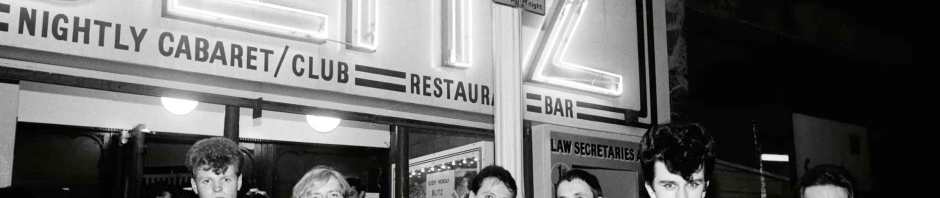
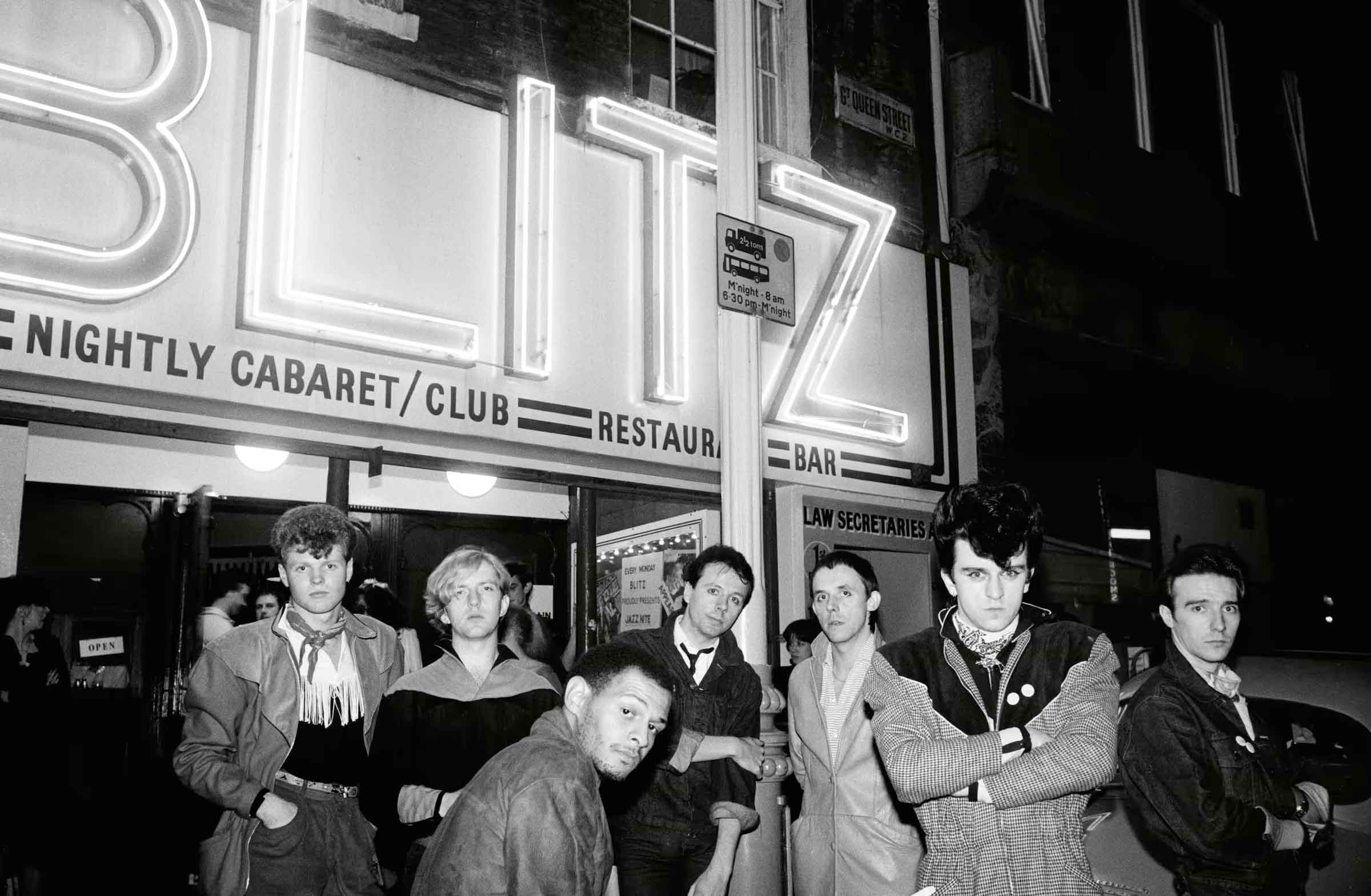
They had a sharp suited Power Pop vibe that chafed against the increasingly flamboyant Strange. Beyond some Fall of ’78 demos, the band mange to record, his time with the band led to nothing. Meanwhile Strange would take his friend Rusty Egan to weeknight clubs like Billy’s where not much was happening. Egan sparked the notion of doing a weeknight club for the ace faces of the Punk scene who stayed in on weekends to avoid getting beaten up by the mainstream hooligan crowd! Thus began Bowie Night at Billy’s on Tuesday evening which became a magnet for a certain clientele. Steve and Rusty convinced the owner to give them a shot and Rusty’s famous DJ playlist began coloring the world of the emergent 1980s. It was a big enough success to have them moving to a larger venue in just three months: The Blitz.
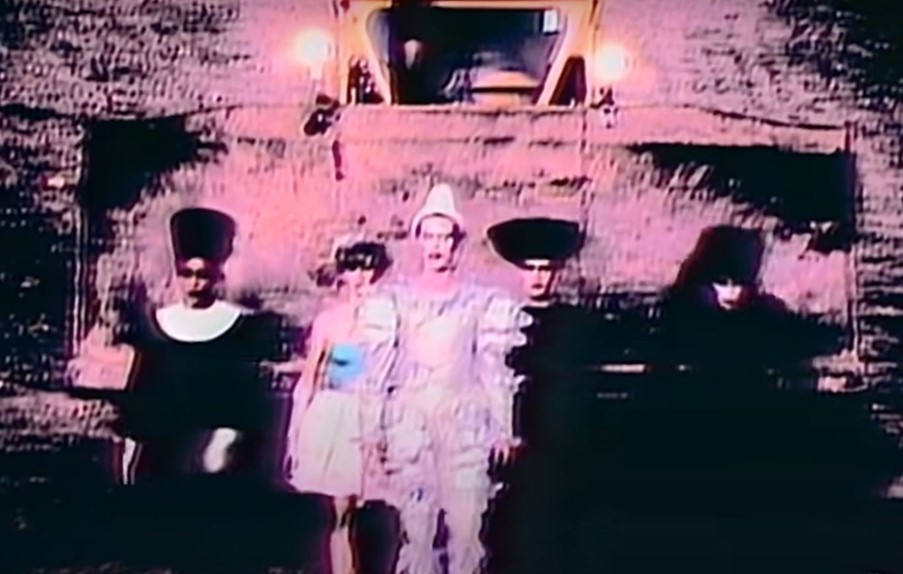
By now the scene was a snowball rolling downhill. The Blitz nights in 1979 were a potent scene of would-be rock stars, fashionistas, and designer/artists tumbling together and attracting media attention. While Egan was involved in the Blitz Club, he and Midge Ure also had studio time left over from the EMI era in the wake of the spilt of their band Rich Kids. It was then that Egan convinced Ure to have a go at picking up members of Ultravox and Magazine with the two of them to form, none dare say, a supergroup for the upcoming era. A band to play the European slanted synth-heavy dance rock that was concurrently filling the Blitz floor every Tuesday night. Scene godhead David Bowie knew to visit the club in order to cast extras for atmosphere in his music video for his upcoming single, “Ashes To Ashes.” Wherein Strange and three other clubbers appeared as a memorable entourage to accompany the Pierrot-clad Bowie in the number one British single.
This notoriety couldn’t have hurt the Visage efforts. And with Strange fronting the group, they recorded some demos that caught the ear of Martin Rushent, in whose Genetic Studios they used to record them. Rushent got an eyeful of the new gear they were relying on and became convinced that electronics were the way forward. He got them a single deal with WEA’s Radar Records and in late ’79 issued the debut single, “Tar.” Which failed to dent the charts, but the band kept plugging away and finally inked a deal with American Polydor and their album was recorded in the summer of 1980. Their first Polydor single would dramatically reverse their fortunes to become an epoch-defining hit.
Billy Currie and Chris Payne were touring together for much of 1979 as members of Gary Numan’s band on the “Pleasure Principle” tour. They had written a track with no lyrics which they called “Toot City.” When writing the new Visage album, Currie brought the demo to the studio and Midge Ure gave it the lyrics we all know as “Fade To Grey.” A perfect snapshot of subdued European ennui layered over some highly impressive synth riffage and perhaps crucially, given a further dose of European fizz via the French lyrics spoken by Egan’s Belgian girlfriend. As released in November of 1980 it gave Visage a top ten calling card in eleven nations. Topping the chart in West Germany and Switzerland. After a few years of Strange scrambling at this, that, and the other band in the hopes of moving from fan to participant, he’d now arrived.

I hadn’t heard the song yet, but I recall reading a review of the “Visage” album in a free local Orlando music mag called “Rocks Off.” It was noted in those pages that Visage was formed by various members of extant UK bands, notably Ultravox. I had finally bought the “Vienna” album in December of 1980; a month after the release of “Fade To Grey.” I was interested in hearing the band as Ultravox had very swiftly become the center of my musical universe. Then, the clincher was hearing “Fade To Grey” on the college radio station I would be listening to at the time. It was in January or February of 1981 when WPRK-FM played the song and I wasted no time in buying the “Visage” album. I felt that it slotted effortlessly alongside “Vienna” to stand like a potent beacon pointing the direction that I wanted popular music to move in.
At this time Visage had arrived as the public image of the by now named New Romantic movement. The first act to be said who were reacting to the club scene that many of its member were instrumental in creating! 1981 would be the year of Peak New Romantic. And not coincidentally, my favorite year ever in British pop. Following immediately on the heels of Visage’s success, the reformed Ultravox, now with Ure singing released their third single, the title track to “Vienna,” and also blew up on the charts. Synthetic European music was now the musical zetigeist to which many aspired.
in 1981 John McGeoch moved from Magazine to Siouxsie and the Banshees; given them his full effort. Juggling Ultravox and Visage projects, Midge Ure and Billy Currie gamely did double duty in both bands for two albums in a row in the ’80-’82 period. But Visage didn’t tour. They were strictly built as a studio proposition, with the musicians having “day jobs” to occupy the majority of their time. Leaving all of the promotion efforts to the extroverted Steve Strange.
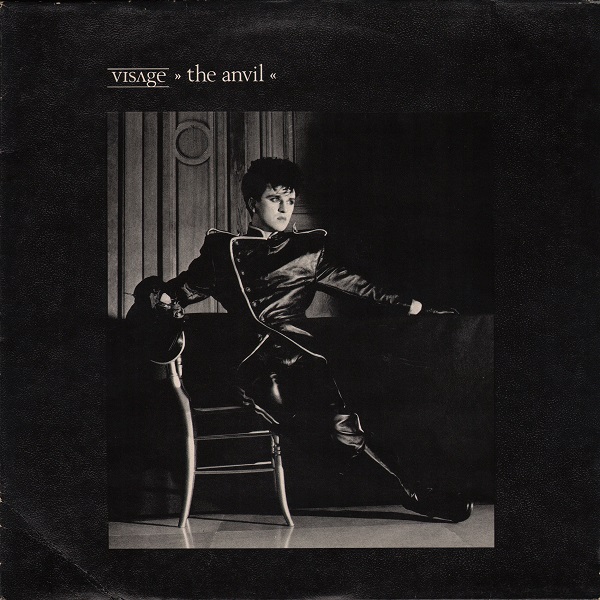
The second Visage album arrived in the early months of 1982. It was sleeker, darker, and perhaps a bit more unified than the first one. “The Anvil” was all matte black leather with the only light reflecting off of scant chromium highlights. The first single, “The Damned Don’t Cry” was a number eleven hit and briefly restored Visage’s fortunes chartwise. I loved the heavy, fatalistic atmosphere of the song and Midge Ure + Chris Cross’s video clip was the perfect New Romantic artifact. Matching the vibe with lush, gauzy images of decadence about to fall from grace. Perhaps an unconscious metaphor for the New Romantic movement itself by that time.
When Strange planned on arriving for the launch of Visage in New York City on the back of a camel, Ure had enough. This was, in his view, spiraling out of control into something other than just cool music. With “The Anvil” in release, his part in the story ended there. Currie remained for a non-LP single that followed the album in the Fall of ’82, but “Pleasure Boys,” despite the recruitment of Steve Barnacle on bass, failed to get commercial traction. Then Currie bailed out of the group, leaving Visage bereft of any Ultravox members, and only one of the three Magazine recruits. Surely a re-think was called for?
Next: …Beating A Dead Boy






![Want List: Visage DLX RM […finally!]](https://i0.wp.com/postpunkmonk.com/wp-content/uploads/2018/11/visage-dlxrmuscda.jpeg?resize=200%2C200&ssl=1)


 Post-Punk Monk
A great read as always Mr Monk. Have always loved Fade to Grey, scared the hell out of my ten year old self. And yes it works beautifully alongside Vienna.
LikeLike
German music shows weren’t that great back then, but at least I caught “Fade To Grey” twice, both times recording it off the TV (most likely in mono), and for some reason missing once the start and once the end of the song. So I attempted to create a complete version in a straightforward – or primitive – fashion, splicing the parts together with a double tape deck. Of course you would hear the bit where the parts connected, but it was the best I could do. Eventually I realized that by accident I created an extended version…
LikeLiked by 1 person
strange_idol – What you made sounds not unlike the famous German 12” version of “Fade To Grey!”
LikeLike