
[…continued from last post]
HAVING IT YOUR WAY…
Post-Punk Monk: I really enjoyed the deep dive into Bolanesque Pop Rock on “If Not Now When?” That was an immediate grabber and a real delight for me to hear. I mean, it’s not the sort of album that I expect from musicians in their 50s, and what was your inspiration for how you made that record?
Dr. Robert: I think it was the last record with Tony still drumming, right? It was because he had family issues [to deal with] that he had to move on. Tony’s a real rocker. He’s got that thing. And I noticed that in sound checks we were jamming on Boogie. Just doing Canned Heat and things like that in sound checks, and I thought, “no one’s doing this really.” I mean, I didn’t want to do like a pastiche, but there’s something in the feel of the guitar and the drums and everything. I just gravitated towards that, and it felt like somewhere that I could go.
So it just felt like the right thing to do at that time with the way we were feeling and the way we were playing, really. I wasn’t sitting there going, “let’s make a sort of Glam Rock Boogie record.” It wasn’t really that. I think the first tune was “OK! Have It Your Way,” which was more like a Stonesish Northern Soul stomp kind of thing. Especially the way we’re playing then, so it just grew from there really. And somebody loaned me their Gibson SG so, I mean… what more can I do? I had to had to boogie on, baby!
P: [laughs] Exactly. You go with the flow.
And somebody loaned me their Gibson SG so, I mean… what more can I do? I had to had to boogie on, baby!
Dr. Robert
R: Yeah. It’s not a guitar that you can play Funk on particularly. It just responds to that kind of digging in and finding a groove, so that’s how the songs came about.
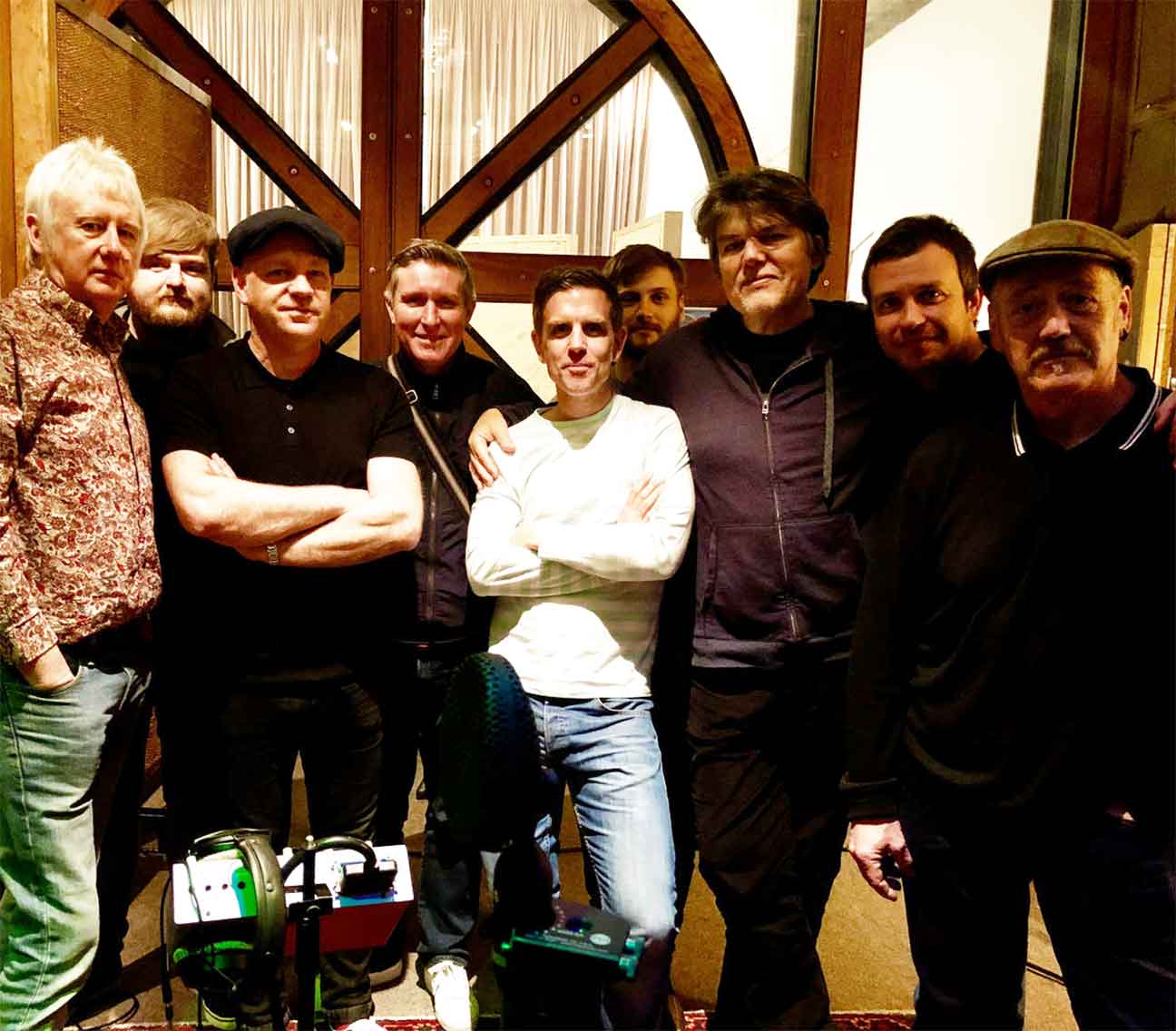
P: Interesting. Because that’s a really fun record to listen to. You’ve also got a lot of side work like the Monks Road Social project which seems to have spilled into the Blow Monkeys thread recently, so you got Crispin Taylor who joined the band and Jacko Peake added his lonely funky flute, which I really love to hear. The Monks Road project hasn’t diluted the Blow Monkeys and I’d say the opposite has happened. But do you keep the whole thread separate or you just write what moves you and then sort it out when it’s done?
R: Well, with the Monks Road it came to me from Richard Clarke with this idea of having a kind of collective thing and because I was the connection to a lot of the musicians; to bring them in. And I also had lots of songs, so it felt ideal, and it got my production chops up a little bit. It took a lot of organizing and a lot of work, but I really enjoyed those three or four albums that we did. I’m taking a little break from it at the moment, because I’m doing other stuff, but it was great and a lot of those people that were new singers coming in…I’ll be honest… it’s a thrill to hear someone else sing your song. I love that. That’s one of the great thrills.
There’s one called “On The Wings Of The Morning,” [on the third Monks Road Social album, “Humanism”] that Belle McNulty did, who sings it great, and I think that’s got Jacko playing flute and stuff like that. And Crispin and Ernie McKone; the bassist and the drummer, are just the best at doing what they do! So, it was quite easy really. And getting Mick Talbot in. I mean, Mick’s a genius, you know? I’ve known Mick for 30 years. It just kind of rekindled my love of the community of music making and of trying things in production and all that sort of stuff. It fed into what I do solo and with the Blow Monkeys, so it’s all music you know.
P: Well, it works very, very good.
R: Yeah, it’s good fun.
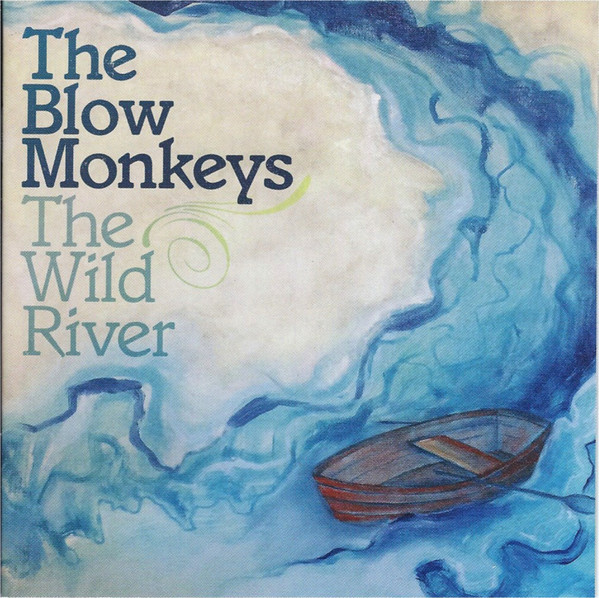
P: I was really impressed with “The Wild River,” and more importantly, my wife was also impressed. After I played it she said, “I want to take that to work tomorrow,” so you know that’s the ultimate accolade there. When your spouse has to play the record.
R: That’s a hit!
P: That was a really supreme Soul Music vibe that I didn’t think could be bettered. And it’s also the one that you went to the expense of having real strings on, so the vibe is palpable when I play it. And it really takes me right back to 1973, but what was it about the material on that album that made you think, “all right, I’ve got to get a real string section on this one?”
R: To be honest with you, a lot of those kind of things are dictated by budget. So Rich is from Monks Road [Records]. We put that out on Monks Road at the time and Richard paid for a guy to do the strings. Ben Trigg, who’s brilliant. He did the strings and there was only couple of tracks; I think “Crying For The Moon.” I think the title track, “The Wild River.” There’s a few tunes on there like that, yeah.
And then conversely we come to this new album that we’re making now and we’re sort of making it without a budget, although we have a we’ve got a label that are going to put out and so it makes sense to me to say “let’s cut right back down, let’s not have any of that stuff.” Let’s just have bass, drums, guitar, voice. Sly And The Family Stone. In your face, you know? And no effects on the voice. Let’s see if we can do that.
Often those things, it’s as prosaic as just the budget that dictates what you’ve got and you just end up using what whatever tools that you have around you. And if someone’s there in the room that is willing to say, “oh I think I can pay for some strings for that,” then I’ll go, “okay, yeah that’s great…thank you so much.” I mean, in the Blow Monkeys days I could get 18 string orchestras because to a point, but of course I’m still paying that off, you know? [laughs]
P: Exactly!
R: And all the cabs home for the guy who played bassoon, or whatever! So, you know that’s the way it goes.
P: Yeah, I know. The record industry is just like a loan sharking operation, basically.
R: Terrible!
BACK TO THE USA
P: So in that regard, it’s interesting so your next album is going to be released on a nonprofit label; Last Night From Glasgow. So how did you link up with them? I mean, with your Socialism this seems like a match made in heaven.
R: Well, they work on a kind of Patreon model. They’ve got so many people paying a monthly subscription and the like. He’s [Ian Smith] just a proper Socialist from Glasgow and his model is really working. He seems to be in favor of musicians, so I’ll tell you in about a year’s time if it’s working or not, but so far so good! I really enjoyed doing it. I’ve also been working with Peter Capaldi on a new album. On the second album of his that’s going to go through the same label, so you know there’s stuff happening there, and that’s been really exciting.
We’ve got Alan McGee [Creation Management Limited] is now helping with management, which is a big help for us, so let’s see what happens over the next year or so with this. Because it feels like a good time for us. I mean I have no… as Bob Dylan would say, I’m not looking for anything in anybody’s eyes, you know? I have no great expectations. I don’t even know what success means anymore. All I know is that to make enough out of a record so that everybody gets paid, and we can make another one, and continue to play gigs to enough people so everyone gets paid. Well, that’s success. Because you ain’t going to make it out of streaming.
All I know is that to make enough out of a record so that everybody gets paid, and we can make another one, and continue to play gigs to enough people so everyone gets paid. Well, that’s success.
Dr. Robert
P: Right.
R: It sorts the men out from the boys. What do you really want out of this? Everything that I used to find quite tiresome about being in a band… you know… the drudgery. The travel. The hanging about. The sound checks… I kind of love it all now, because I know that this experience is finite and we’re still musicians. We’re working on coming to The States. We haven’t been for a long time. We’re very hopeful that we’ll get there next year because we’ve had some proper interest. So that would be nice and things like that are really exciting again you know to get out and play to people that we haven’t done for ages and that’s really the best thing.
I mean, the juice of it all. I love making records and I love talking to people like you, but the best thing is playing live to people and seeing some kind of communal joy that just music can provide, and we learned about that during the Covid time. That how important that that is. And it’s not even about the band and who they are on stage. It’s not about the star or any of that crap. It’s just about channeling that feeling so that people get some kind of elevated experience that makes us connected. I mean, I know that sounds slightly high faluting, maybe a little bit too kind of far out, but really, that’s the conclusion that I’ve come to at the end of it. Where I am now.
P: No there’s nothing pretentious about that at all. In fact that’s getting down to brass tacks of what life is really about.
R: Yeah!
P: This is great to hear that you’ve got maybe an offer to come to The States and someone’s interested, because as far as I know, you’ve only toured over here for “Animal Magic” back in ’87 right? So that would have been it.
R: Yeah. ’86, in fact. We played with Robert Palmer. The first gig was Red Rocks with Robert Palmer, and then we played with The Psychedelic Furs, and then we did a whole bunch of clubs ourselves. So yeah, we haven’t been here in a long time. I mean, I was in New York for quite a while afterwards recording and doing stuff at BMG and all that, but we haven’t played for a long time so we’ve got some genuine interest. We’re just putting it together now, so I’m pretty certain that we’ll be there next year, yeah?
P: Well that’s fantastic news because I never got the chance, and what’s irritating to hear for me was that you opened up for Robert Palmer and The Psychedelic Furs, because I saw their tours in that period and you were not the opening act that I got to see in Florida at the time so, I would have really loved that.
R: No, we didn’t play in Florida. They did, but we didn’t do that. Anyway we’re coming!
P: That’s great to hear because I’ve had some of my some of my friends who also have their names in your CD booklets …they asked me to ask you this. This was the one question I got from my crew on that. I asked, “any questions for Dr. Robert?” And got, “yeah, are they coming to The States?”
R: Yeah, I mean we are. And it’s helped us have having Alan McGee on board because obviously that’s opened a few doors with him calling and speaking to promoters and stuff. But because we haven’t been for so long, you know? There is interest and we are already talking about specific days and stuff, so I think I think it’s going to happen.
P: Great! I’ll look forward to any news on the mailing list.
R: The minute it’s confirmed it’s going out.
The whole mixture of those three elements: that jazz rhythm section, that punky guitar, and the sort of Afro horns is still something that I’d like to do. That I really want to get back to one day. It probably is a Blow Monkeys album. I think we’d need to get some players in to do something with that one, but that would be that would be high on my list of directions to take in the future.
Dr. Robert
DOCTOR IN THE HOUSE
P: Excellent. I have to say I was very happy to see that “The World Can Wait” got on the CD of “Time Storm,” because that was possibly the most exciting song the band could have restarted their career with. The fluid vibe and the tempo shifts between Jazz and Pop were very exciting for me to hear, and Mick Anker’s double bass work was the best I had heard since Danny Thompson on [David Sylvian’s] “Brilliant Trees,” and the whole band took it home in the coda. So I’ve got to ask you, is there any chance you might ever do a full-on Jazz record? Because that was just supremely good to hear.
R: Oh yeah, well you know I’d love to. Mick is amazing. Mick’s bass playing is amazing. That influence was something that was there in the very early Blow Monkeys. When I was a teenager in Australia, the bands that I was kind of watching were very early versions of things like the Laughing Clowns, or Birthday Party and later on I found out where their influences were coming from. Bands like Can or Captain Beefheart or whatever it was, and that whole kind of world opened up to me. I mean, I’m a sucker for that kind of shuffling BeBop based thing, but with a guitar. That mixture still excites me and I still love that Laughing Clowns thing where you’ve got these kind of out of tune Fela Kuti type horns. The whole mixture of those three elements: that jazz rhythm section, that punky guitar, and the sort of Afro horns is still something that I’d like to do. That I really want to get back to one day. It probably is a Blow Monkeys album. I think we’d need to get some players in to do something with that one, but that would be that would be high on my list of directions to take in the future.
P: Well, that’s good to hear because that was really exciting to me.
R: It’s not particularly commercial. I mean, by the time when we had a hit with “Digging Your Scene,” we were still that band that was playing those kind of songs from the first album. so when the teenyboppers turned up because they’d see me on Top Of The Pops or whatever, and they were hit with this band that, okay, we had “Digging Your Scene” and a few others, but still our set was based around “Limping For A Generation.” And songs from before then. And they were a little bit taken aback. They weren’t getting Haircut 100, you know? [laughs] So we failed on that level! We weren’t very good at being Smash Hits type pop stars.
P: I know, but you failed magnificently. There’s so much so much diversity in your canon of songs but I also have to ask you about how the Blow Monkeys were the for my ears, the only British pop act that really made House Music that was fantastic! How did the rest of the band adapt to those sort of wild stylistic shifts that your songwriting was putting them through? Did you ever have to have to hard sell the band on a direction?
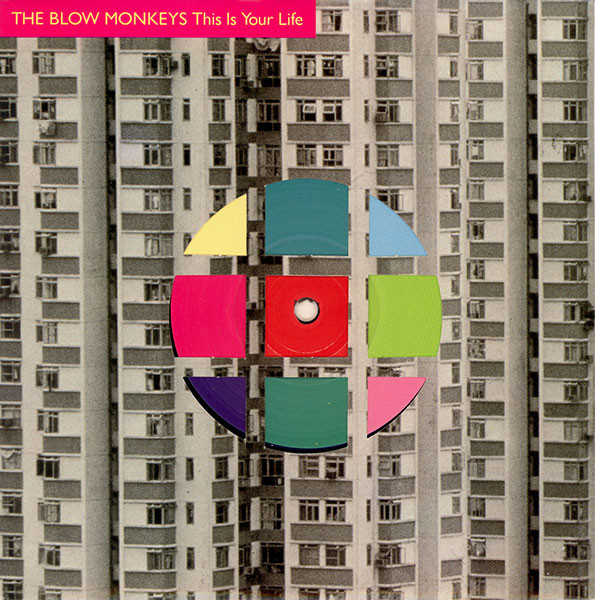
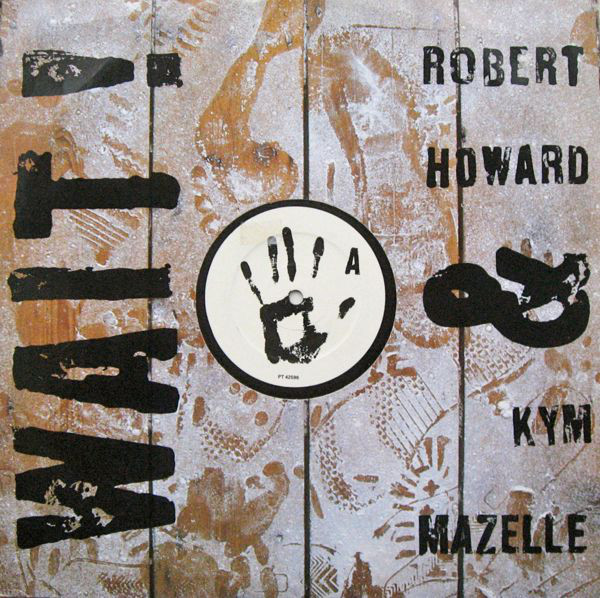
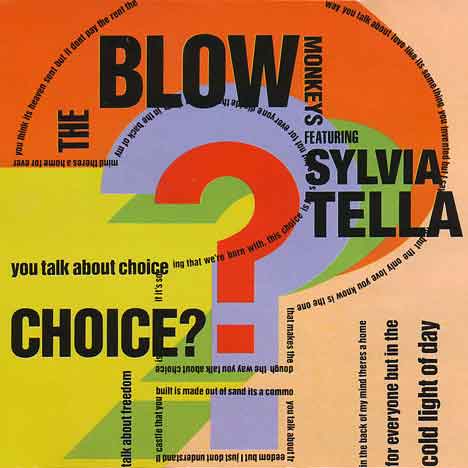
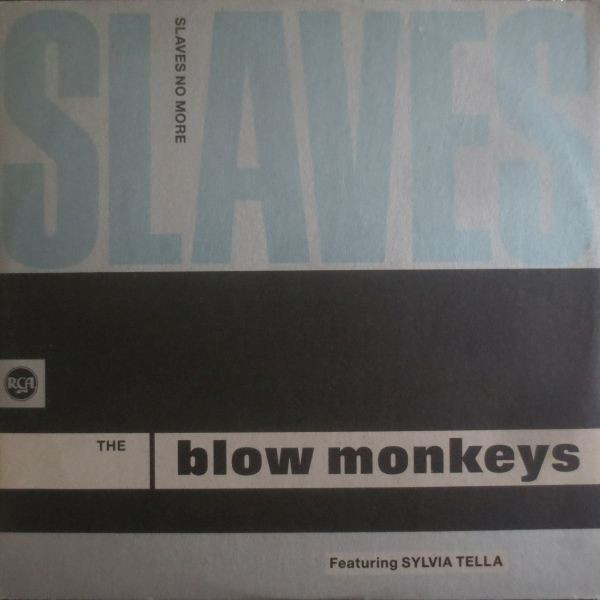
R: No. It was a benevolent dictatorship. I mean the thing was “Wait” was a big hit in the UK and Europe and that’s enough to satisfy everybody. I mean the thing about “Springtime For The World,” the last album, is that I probably should have made it a solo album, because I do think that was difficult for the band at that point, but there was a period in the 80s anyway where it was the Linn drum took over. If you listen to “Digging Your Scene” or “It Doesn’t Have To Be This Way,” that’s not the band on the rhythm section that’s the Linn drum triggering the bass. And so that made it very difficult to go back, because the pressure is on to have hit singles. To continue this thing, you know?
P: You get on the treadmill and you lose control of it.
R: Yeah, exactly and you know it wasn’t until the end of the ‘80s when sampling came in that traditional drum sounds started to be re-introduced to pop music like James Brown’s “Funky Drummer” and all that kind of stuff that was used so often. So it was difficult for the boys but we were so busy touring and playing and having a great time, that everyone went along with it and they trusted me. But I realized when we got back together there’s no point in doing any that. There’s no fun for anyone. Mick is a great bass player. Tony was a great drummer. Crispin is a great drummer, so let’s use that. Let’s put that out front.
The house thing… I was living with the DJ Hector [Heathcote] in Brixton. I was exposed to this kind of music and I was just digging it and I wanted to do I wanted to experiment. I wasn’t very happy particularly with “Whoops! There Goes The Neighbourhood.” I thought it was too clean. I thought it was too antiseptic and it lost something in the kind of spirit of it, and so the very last song I did for it was “Wait.” It wasn’t meant to go on there, I just said, “look give me two days to do a quick solo record,” and then because it blew up, and then we had to put it on that album, which help sell that album, but I wasn’t really happy with “Whoops.”
So I was talking to someone yesterday going, “oh that was the first proper UK House record, you know, that was a hit.” I never thought that way but in a way I guess it was, because it was so homemade. What I loved about the early House records coming out of Chicago where they were trying to make these, kind of Philly disco records from the 70s, but with primitive gear. It had a kind of punk ethic. I loved that and that’s what I was after really. It was short lived. I didn’t I didn’t want to stay in that world because I needed more, but I still love those records from that time. It was an authentic kind of feeling.
LOOKING TO THE NEXT GENERATION
P: I actually love the “Whoops! There Goes The Neighbourhood” record. I appreciated the fact you worked with Leon Sylvers III. That was a big surprise for me, and for “It Pays To Belong” on the video for that, you look forward to the era of the EU and now it’s over for Britain. Could you have ever imagined the future we’re living in now? It’s just gone from bad to worse over time. Given that we’re in such a mess right now, where do you find hope looking to the future? What gets you through the day?
R: In young people. I sit and listen to people of my kids’ generation – they’re not children they’re in their early 30s now, and I hear them talking about mental health. I hear them talking about ecological issues, and I think, “god, you really are way ahead of where I was at that time.” And I can’t wait until your generation get rid of this generation that are in power now, because I think there’s more enlightenment. People call it “woke.” Woke is just aware, you know? It’s just being aware. It’s like what they used to they used to call “political correctness” as a put down, but it’s the same thing. It’s awareness, it’s empathy for your fellow human beings… for animals, for the way we produce food… everything.
So this is the last hurrah, I think. The Boris Johnsons. The Putins. The Trumps. Those kind of psychopathic blonde leaders. They know that their time is limited and they’re thrashing about. I just hope that they don’t take us all with them. It’s unbelievable what’s happened in the UK, but that’s a whole other argument because the power of social media to spread lies and do what they’ve done. Because they’re so lost that they wrap themselves in nationalism instead of seeing themselves, but younger people, they see themselves as part of Europe. They’ll go back. They are already gradually sort of shrinking back. It’s depressing in the short term. In the long term I do have a lot of hope.
P: That’s sort of my attitude. I’m always very cynical in the immediate present but I have a long-term view of the future that’s much more hopeful. It’s how you have to be, otherwise you’ll never get through this life.
R: Well, we’ll never get out of this alive, but the thing is the natural process is to continue to get more and more conscious. More and more enlightened. And we just have to keep putting our faith in that and there are plenty of good people out there as well who are helping that process and we have to support them. The old politics is based on this kind of survival the fittest capitalist wet dream. Within, it has the seed of his own destruction, and we have to fight that. Music’s a great way of fighting it.
We thank Dr. Robert for his time and assistance with this interview. We’ve been riding this bus for a long time and its gratifying to see how the band have grown and flexed their creative muscles over their 42 year history in vivid ways. Coming next, we can sit back and await the next Blow Monkeys album, due out next year on Last Night From Glasgow. There is also the tantalizing prospect of The Blow Monkeys gigging in America instead of just the UK and Spain [where Dr. Robert lives]. For that we won’t be sitting back, but instead, will be on pins and needles. I can think of a few friends and commenters who we might have to have a meet up with should that occur. Speaking of tour dates…
BLOW MONKEYS UK TOUR | LATE 2023
Nov 23, 2023 | Liquid Room | Edinburgh, UK
Nov 24, 2023 | Slay | Glasgow, UK
Nov 25, 2023 | Brickyard | Carlisle, UK
Nov 30, 2023 | The Globe | Cardiff, UK
Dec 1, 2023 | The Crossing Digbeth | Birmingham, UK
Dec 2, 2023 | 229 | London, UK
Before we check out there’s also the matter of the band’s last UK tour dates for 2023 to mention. Look for the band at these venues and dates. Finally, when we next return, we’ll have a close look at the new “Time Storm” greatest hits volume two album for the band that’s due on Friday. When sleeping fits in there is beyond me at this point.
-30-






![Want List: Visage DLX RM […finally!]](https://i0.wp.com/postpunkmonk.com/wp-content/uploads/2018/11/visage-dlxrmuscda.jpeg?resize=200%2C200&ssl=1)


 Post-Punk Monk
Fantastic interview, thank you!
LikeLiked by 2 people
SimonH – I told Mr. Howard up front that I would try to ask good questions and not waste his time. Hopefully I hit that target, and I really want The Blow Monkeys to make that Souljazz album he posited!
LikeLike
I’m sure you did, sounds like he enjoyed it!
LikeLike
SimonH – Well, he suggested we have another one when the new album comes out so I guess so.
LikeLiked by 1 person
U.S. tour dates would be an unexpected treat. This was a good, in depth interview. Thanks.
LikeLiked by 1 person
Fragile Gods – Thanks. I really wanted to focus on the second phase as it has been an embarrassment of riches that has flown beneath many musical radars. Let’s all focus our energies on that US tour! Write your local congressperson. Take nothing for granted.
LikeLiked by 1 person
The encouraging thing to me is new management which is taking the initiative to arrange a U.S. tour. From Realms of Gold onwards, so many releases have been under-promoted and flew beneath the radar. With a little management and promotion, they could have reached a lot more people.
LikeLike
Fragile Gods – Alan McGee is no babe in the woods. I had no idea he was back into the game but he’s definitely a player!
LikeLike
A great conversation he obviously enjoyed. I think you poked into just the right areas, not covering much of the well-trod ground that is the early Blow Monkeys. As for the US tour, that would be something I would have to strongly consider crossing borders to see, but I (selfishly) hope it will be in the latter half of 2024 for budgeting purposes.
Well done!
LikeLike