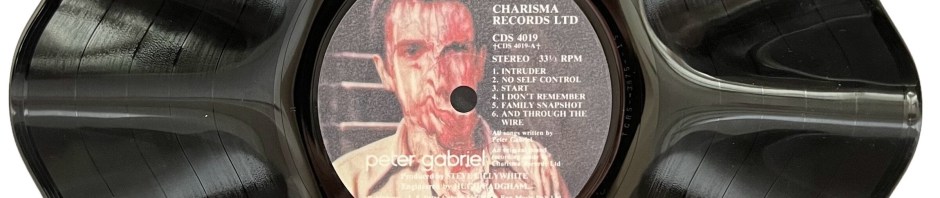

[…continued from last post]
Gabriel warmed up vocally and was laughing at something. These non-sequiturs were sprinkled in the tritone synth drones that opened up the introduction to “Not One Of Us.” Queasy Chapman Stick leads from Tony Levin vied with Fripp guitar leads as more of the distinctive Gabriel brittle, distorted BVs which were one of this album’s calling card were joined by rhythmic and unvarying identical eighth note BVs which were yet another.
The ADSR envelope on the synths made the attack and decay sound like it was being played backwards compared to what our ears expect to hear from acoustic sounds. Then by almost a minute in, Marotta’s drumbeats and open guitar chords from David Rhodes that occupied some of Andy Summers’ sonic turf took this song down what ever, for this album, familiar roads. “Not One Of Us” existed comfortably within the stylistic parameters of Peter Gabriel’s third album, but nowhere else… before or since!
The verses were polite, with only the drums adding the occasional fill every few bars, but once the gears shifted for the song’s chorus, the rhythms briefly stopped to realign themselves for something altogether funkier. Finding the strident urgency and power in the paradox of the dominant culture coming together to build social barriers to communion.
The wordless middle eight one more restated the unsteady, tilting horizon of the intro before venturing into the extended breakdown and coda. The sort which were part and parcel of the album’s DNA, with Marotta’s powerful polyrythmic drum fills dancing with grinding synth drones and Gabriel interjecting the title repeatedly with his distorted voice and Rhodes’ power chords. With Gabriel ultimately repeating “no” eight to the bar as the drumming became more and more agitated. finally leaving the drones as the final word in the coda.
Marotta’s marimba repeated a rondo figure that almost suggested a kalimba and then the nine, single piano notes added their glassy elegance to the intro to “Lead A Normal Life.” The entrancing mantra of the sound was broken 45 seconds in with more distorted, wordless Gabriel BVs which were the de facto Greek Chorus for this album. With a descending piano figure joining them for discomfort.
Then the sequence repeated with a glockenspiel joining in to herald that rarest of birds, the instrumental song with a vocal middle eight. The rhythms cut out entirely and we were left with just Gabriel on piano and the spartan vocal, describing a stay in a mental hospital. The impetus for Atlantic Records to wonder if this music had been the result of Gabriel having been “put away!”
After the brief lyrical interlude, the melodic theme restated itself, this time with distant tympani drumming also fading up with the marimba following the distorted backing vocal. And the suggestion that all was not quite right resting on the random wave peals of synths sowing chaos in the altogether darker coda.
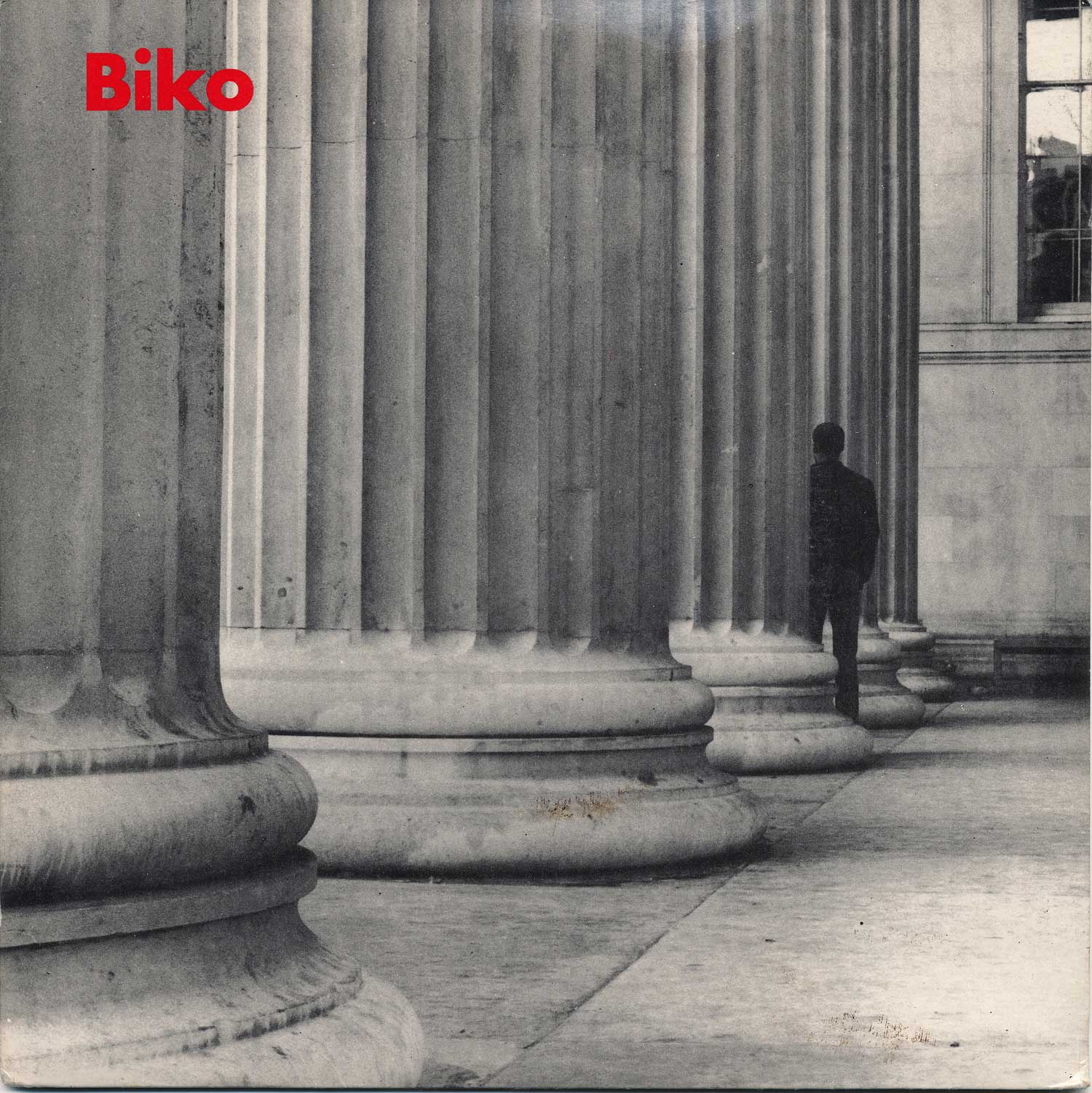
The third single and final song was the lament for the death of Stephen Biko; a Bantu activist in South Africa who was killed in interrogation by the police force there in 1977. Hearing this song was an eye and ear opener in 1980. By the middle of the decade, South Africa’s apartheid system was under intense worldwide scrutiny, but the news of this was slow to reach my consciousness back then. I was only first aware of South Africa’s apartheid after watching a particularly pointed episode of the surreal [but not stupid] British comedy The Goodies a year or so earlier. I didn’t remember hearing about Stephen Biko’s incarceration and death at the time but after hearing this song, I imagine that many who listened had their eyes opened.
It began with a recording of African voices singing a song at at Biko’s funeral before a slow, methodical beat, as played by Phil Collins on a Brazilian surdo drum, which grounded the song like a world-weary heartbeat. A single guitar chord arced overhead across the horizon twice as a distorted scream shriveled in the distance. Gabriel set up the scenario with the economy of a reporter and the eye of a poet. He had been shocked and moved by the death of Stephen Biko three years earlier and had journaled in his diary on it and these entries were the basis for the song that eventually came.
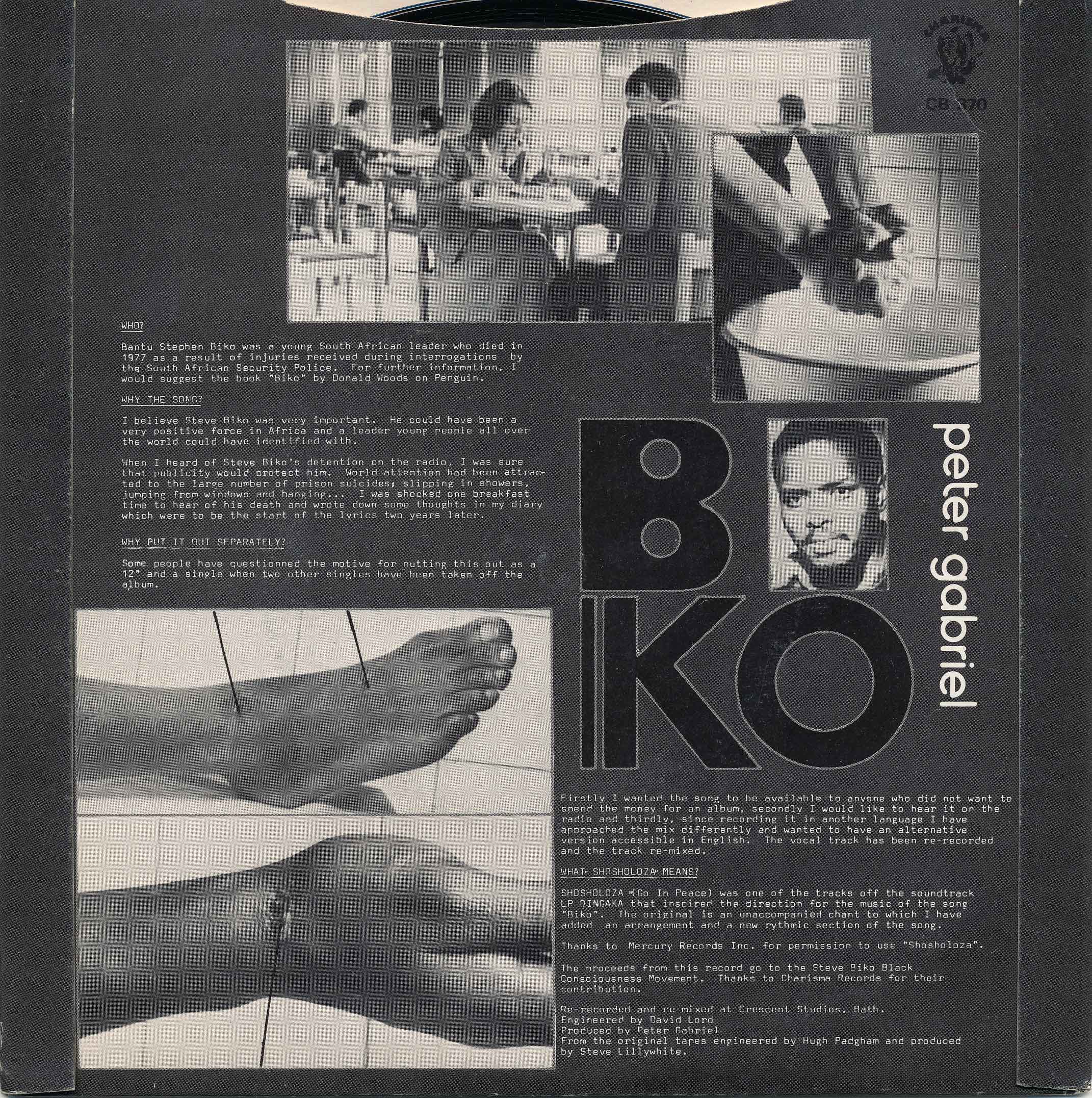
What came three years later was nothing less than a social justice anthem that helped to focus the world’s eyes on what South Africa’s apartheid state was doing. With a minimal, and primeval beat with guitar drone, vocal chanting, and Fairlight bagpipes as played by Larry Fast. The song avoided any over-egging as it set a mood that began dispassionately describing the everyday conditions of Biko’s death [“business as usual in police room 619”] before internalizing Gabriel’s anguish over it in the second verse, and ultimately coalescing into a mixture of hope and defiance over the course of its seven minutes and twenty two seconds. Wisely showcasing the economy and power of Gabriel’s vocal and lyric. The climactic third verse is an all-time best from anybody, not to mention Gabriel.
You can blow out a candle,
“Biko”
But you can’t blow out a fire
Once the flame begins to catch,
The wind will blow it higher
The wordless coda was a thing of wonder as the melody expanded and rose to fill any space it ultimately bled into. The eyes of the world were indeed watching now, as the final lyric offered. Once more as the song faded, another song from Biko’s funeral played on the fadeout before two final drumbeats rang out like shots. Bringing the album to an end and echoing in reverse, the beats that had opened up the recording on “Intruder.”
It bears mentioning that this album loomed very large in my 1980 world, and like a few crucial albums I could also name, has only loomed larger with the passing decades. It was a stunning work that announced that Peter Gabriel was no longer the ex-lead singer for Genesis. The first album had been a tentative step forward, and the second was a more radical break which, at its best, telegraphed the progress that this album made as a matter of course. This was the sound of the artist growing by leaps and bounds and with it, Gabriel moved to the front of my musical queue for half a decade.
The album which his American label saw as commercial suicide topped the British charts, and sold very well in America, reaching number 22. Atlantic’s A+R man, John Kalodner, who had advised Atlantic’s Ahmet Ertegun to drop Gabriel instead of releasing this album as part of his deal then moved to the new Geffen Records label…and advised David Geffen to sign Peter Gabriel! And they did.
Gabriel for my ears, made one more album that was on par with this one. His fourth album, a.k.a. “Security” in America, who gave it the “disposable” title that was only on a removable hype sticker. After this, Gabriel’s only work that touched me was his film work with the music from Alan Parker’s “Birdy” being remixed material from his ’80 and ’82 albums, and Martin Scorsese’s “The Last Temptation Of Christ” soundtrack.
He managed to score a huge pop hit with his “So” album of 1986 and then settled into ever longer periods of making albums that didn’t manage to catch my ear. Really, there’s only been three studio albums since 1986: “So,” “Us,” and “Up.” And the last one was issued 21 years ago! He’s got a new one allegedly being released this year but I’ve not heard a note from it yet but that’s just fine with me. I’m still too busy soaking up the miraculous work that he released in 1980. Had he taken a vow of silence following this disc, it one alone would have been enough to have secured his position in the Art Rock pantheon.
-30-







![Want List: Visage DLX RM […finally!]](https://i0.wp.com/postpunkmonk.com/wp-content/uploads/2018/11/visage-dlxrmuscda.jpeg?resize=200%2C200&ssl=1)

 Post-Punk Monk
This has been an intriguing read, which makes the album much more interesting than I have ever found it. For me, the second solo album is warmer sounding and more interesting, and although I find So very oveproduced it’s also good, with some great songs. I do wish Gabriel would ‘chill’ and allow a few rough edges into his work; it’s all become a bit sterile.
LikeLiked by 1 person
Rupert – I cannot believe that I’m only now noticing the Springsteen tropes that made “Family Snapshot” even more fascinating and compelling to me! I think the warmth that Fripp brought to chapter II would be out of place on III. “So” leaves me cold, with the exception of “Red Rain.” And yes, what little I’ve heard after that sounds overworked and under egged. Lifeless. Ferry also overthinks his work but it’s not exactly fatal to the overall gestalt. Though it’s better when he doesn’t. As with “Frantic.”
LikeLike
For me, Ferry always needed the likes of Eno and/or Manzanera to disrupt his perfect pop. Glad we agree re. Gabriel’s latter day musical coldness though. I saw Gabriel’s first tout in London, with Fripp in the wings, out of sight to most, which was very strange. Most of that first album is unmemorable and was such a [deliberate] change to Genesis – who i loved and still love (before Gabriel left) – that it was a difficult listen, live or on record.
LikeLike
Rupert – As I recall, Fripp was technically on sabbatical at that time and probably wanted to avoid the appearance of succumbing to the lure of Rock. Hence the odd nature of his offstage performance. I was never a big Genesis fan. I have only owned Nursery Cryme,” “Foxtrot,” and “The Lamb Lies Down On Broadway” on LP. All divested early on, but my wife has bought CDs of “Foxtrot” and “Lamb,” so I have access if I remember they are there! Rediscovering a copy of “Foxtrot” in the racks was a shocker to me a year or so ago. I liked “Lamb” quite a bit and had bought my LP of it after 1980. Even Chris Lowe had nice things to say about it. What’s odd is that I also have this:

My records tell me that I bought it at a Goodwill for $2.00 12 years ago! It was a new 1999 version of “The Carpet Crawlers” as produced by Trevor Horn and sung as a duet by Gabriel and Collins! It’s different. Neither a disaster nor a triumph. More of a oddity. Made to promote a 1999 Genesis hits CD.
LikeLike
I did hear the Horn reversioning… i’m afraid that i mostly think Phil Collins should have his mouth taped shut, so wsn’t impressed. i gather it was studio trickery rather than really a duet or shared project.
i suspect i am older than you, so grew up on progrock. i still love yes, van der graaf generator and other stuff, though those aren’t my main musical interests these days.
R
>
LikeLike
Lovely tribute to one of the best albums of all time. Thanks for giving me an excuse to pull it out again.
What I’ve heard of the new stuff is pretty encouraging, actually. It’s much more in keeping with his 1/2/3 albums compared to So/Us/Up. He’s still experimenting: most of the tracks have been released in multiple mixes, but they aren’t dance or extended remixes, instead he’s employed some heavy hitters of the engineering world (Tchad Blake and Mark “Spike” Stent) to mix the same song in whatever way they would normally do it. There’s also Atmos mixes done by yet a 3rd mix engineer…
LikeLike