 July 15, 2015
 [continued from last post]
Then it was time for an abrupt change of pace. The brief instro “W.W.9” was a co-write with Thomas Dolby, who assays the sort of synth and piano action here that pointed to the development of “Airwaves” on on hand. On the other, the piano elegia also provides a echo of the intro to “Two Tribes” that existed five years into Trevor Horn’s future. It’s tempting to suggest that when he heard this, he filed and saved the memory for when he was crafting another apocalyptic war song several years later for Frankie Goes To Hollywood.
Then, the Woolley version of “Clean Clean” began and this evidenced further differences from the familiar Buggles version. The war song attributes of the Buggles version were heightened here not only by the “W.W.9” intro, but the song’s coda, which invoked air raid sirens and then segued back into the “W.W.9” music. The refrain of “half a million in the very first attack, don’t you worry ‘cause you know we’ll get them back” gets an emphasis here that heightens the queasy atomic warfare feel that was all but buried in The Buggles version. I will state that the middle eight in The Buggles version stomps its brass band all over the tepid jazz solo that Dolby proffers here.
“Goodbye To Yesterday” was an older song from his publishing days called into service with a lyric change to make the sentiments more “New Wave” [“broken car” instead of “broken heart”] but the intro to this song strongly suggests that all concerned had heard the rogue cover version of “Boys Keep Swinging” that had beed released that previous summer by The Associates. As one familiar with the backing track to that cover version, it’s is all but impossible not to sing The Associates arrangement over the intro to “Goodbye To Yesterday.” With Russell Mael also being a touchstone of inspiration for Billy MacKenzie, it’s not out of the realm of possibility that Woolley wasn’t also aware of the nascent Associates singer. Both men had developed singing voices along similar lines. The larger difference between them was a question of temperament. Woolley had accepted the terms of the industry and sought to prosper within it whereas MacKenzie followed a zigzag path fraught with difficulty as he would seek to meet the business half way one moment, only to run wildly in his own, opposing direction the very next.
The bonus tracks on this CD version date from the non-LP singles that preceded and followed this, the only Bruce Woolley album. The singer is dismissive of his debut single, “Bobby Bad” but I’m much kinder to its indulgences. The influence of Sparks was writ large across the face of this one, but like Russell Mael or Billy MacKenzie, the caliber of Woolley’s singing here provides its own justification, thought the boppy, New Wave track was a bit cartoonish. Especially compared to the rest of the bonus tracks, which post-date the album itself.
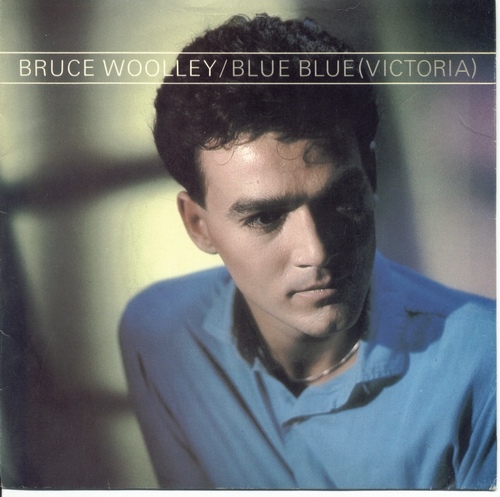 I can truly say that the next two tracks constituted what should have been a crucial single of the year 1981 for me. “Blue Blue [Victoria]” and its B-side, “1000 MPH” were simply stellar material. Following the release and promotion of his debut album, Woolley’s core band had dispersed with many members following Thomas Dolby to his emergent solo career. Woolley next recruited Simon [Hawkwind, Bowie, Japan] House on synths and Nigel [Saxon, Toyah] Glockler on drums and the uptick in the sound is notable. Matthew Seligman of the old band played on this single as well, but in listening to it, one can sense the perceptible shift in tone that happened then the seventies became the eighties!
As Dave [Vibrators] Birch hewed to the mid-late seventies guitar style on the debut album, this record was every inch a step away from such “rockism” as it was known in the UK press of the day into the New Pop aesthetic. In fact, there is no lead guitar on this single! It was a sleekly performed machine for moving forward on jets of air [was that a Be Bop Deluxe title waiting to happen, or what?] that was every inch a forward looking achievement. The resulting record was sleek and professional but also richly warm as the encroaching digital future sounded as if it had been held at bay. Crucially, it remains lodged in my cranium for days at a time.
The arrangement here was paramount. The melody fluttered brilliantly across the larnyx of Woolley here with an irresistible vocal performance matched by the warm synths and the baby grand piano of House. The middle eight actually becomes a jazz vocal from Woolley. This song might have been made two years later, but the style of 1981 ensured that it roared to life at exactly the right time. The playing and production style was all the richer for it. It perplexes me that I missed this single in 1981, which was to my ears, a year of crucial singles unmatched by any other year that I could name, and this one, 34 years later, would have only grown in stature to my ears had I been so fortunate to have heard it back then.
The throwaway B-side, “1000 MPH” remained a thing of wonder. It began with a synth rhythm keeping time as what sounded like a racetrack announcer began counting up from 100 MPH in large increments, until by the intro’s end, the voice sounded drenched in hyperbole as the velocity of the title was finally reached, to the onslaught of a huge drumroll that at that point became a blur. There is not much by the way of lyrics to this “song.”
“I go a 1000 miles per hour
I go a 1000 miles per hour
I go a 1000 miles per hour
I go a 1000 miles per hour
Somedays I go 100 miles per hour
Somedays I go 100 miles per hour
Somedays I go 100 miles per hour
Somedays I go 100 miles per hour” [repeat] – 1000 MPH
What is does have, in spades, is sheer exuberant velocity! It remains the finest piston-pumping Sparks B-side never recorded! It is exactly the sort of shenanigans that great B-sides were made for! It’s a sketch that explores an idea that maybe wouldn’t/shouldn’t be expanded into a song, but having gone there, it immediately justifies itself to all doubters!
 The next single was an absolute must for any fans of Thomas Dolby’s “Golden Age Of Wireless” album. “Ghost Train” is a compulsive Woolley/Dolby co-written song that not only reflects 150% the emergent Thomas Dolby solo aesthetic, but features a truly great lead vocalist singing the song to boot [sorry, Thomas!] No kidding! “Ghost Train” was abundant with stylistic Dolby solo tropes that make every inch of this fantastic song recall some similar gambits in sound and composition that Dolby exercised on his “Wireless” album.
Huge swaths of the D.N.A. of tunes like “Weightless” or “Windpower” are stacked up in this tune like cordwood. The “rows of tiny children” line in the lyrics reeks of Dolby and even Woolley’s delivery hews closely to what Dolby gave vocally to his own album. The portamento synth hook is so Dolby, that I can’t believe that he’s not actually on this record, but this was another number that Simon House played on. The sound design not only anticipates what would happen on “Wireless,” but also things like Dave Stewart and Barbara Gaskin’s covers of Dolby material, like “Leipzig!” This track could have been slotted onto the recent “Wireless” DLX RM and no one would have batted an eyelash!
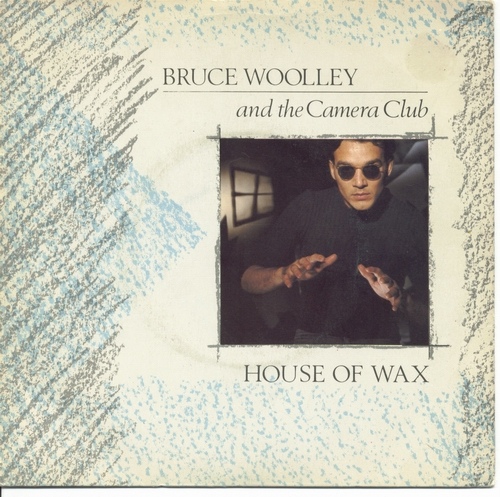 Finally, Woolley’s last non-LP A-side figured here and “House Of Wax” was a track that had been earmarked to herald the second album in the can from Woolley, but the single’s performance put the damper on such notions, leaving this single as its only trace. It’s a great piece of motorik pop showing that as much as the album reflected its late 70s gestation period, the new material was looking ahead to the dawning age in perfect synch with other, similar thinkers. Listening to these later singles really sounds like Woolley could have been moving in similar territories to the post-Rankine Associates. All of this material sounds like a good fit for an album like “Perhaps.” Not shockingly, keyboardist Simon House who played on these sides also figured on that album as well, albeit on violin only for the title track.
The fascinating thing that this disc documents is the nexus of creativity that linked Trevor Horn to Thomas Dolby through the single degree of separation that Woolley represented. Not for nothing did all of these gentlemen excel in their fields, if in different ways. Horn’s ear for arrangement and recording made him a go-to producer’s producer. Dolby brought his songwriting talent and musicianship to the table and managed to get the elusive solo career that both Horn and Woolley missed out on. Woolley was easily the finest singer of the three, but paradoxically, his fame resided in his songwriting capability, with millions of records sold that he wrote for others.
According to the liner notes, he revealed that he received half the publishing royalties on “Video Killed The Radio Star;” the kind of hit that can set one up fairly comfortably if one plays one’s cards right. That he went on to pen hits for Grace Jones and Cher that sold even more robustly, means that his fortunes were secured by his songwriting talent; ironically, reflective of the lean years he spent honing his craft for music publisher Everblue, where he met Trevor Horn back in 1976. The shame was that judging by the evidence of this CD, Cher’s gain was certainly our loss. One hopes that Cherry Red might eventually issue the “Shadows” album that sits in a tape box somewhere. On the evidence of these bonus tracks, it could be a corker.
– 30 –







 Post-Punk Monk
I had this album on vinyl years ago but I sold it, never really clicked. I was aware of the Dolby connection, and I am a huge Dolby fan, but I had not heard Ghost Train until just this minute. Holy crap, where has this been all my life? Now I guess I have to seek out the Cherry Red CD.
Amazing.
LikeLike
jsd – Glad to be of service!
LikeLike
There’s a tonne of great records that got put out in 1979, but this is in the top rank of those albums IMO. Truly a tragedy that his second album got shelved — I hope someone brings our passion for the possibilities to life. How about it, CHERRY RED???!
LikeLike
chasinvictoria – Well, if Cherry Red can issue the second, stillborn Photos album, why not “Shadows?” Surely Woolley has written enough hits for others that there might be a reasonable interest in it?
LikeLike
I know this post is positively ancient in Internet time, but I couldn’t find any other places to comment on this album. I’ve only recently discovered the Cherry Red reissue, having bought the Epic CD when it released back in 99.
I was under the impression the version of English Garden I already owned was the UK version but according to the Cherry Red booklet “This collection includes the original UK version of English Garden, released for the first time on CD.” Strange. It’s definitely not the same version as on the Epic CD I own, but something didn’t seem right. Why was this newer CD using the US title and artwork and the previous CDs using the UK title and artwork? Or was the Cherry Red version actually the US version?
I’ve since gone down a bit of a rabbit hole looking at the different versions of this album. I found a rip of a US vinyl copy on YouTube and the VKTRS track on the Cherry Red version is closer to the YouTube version than the previous English Garden CDs. It appears to be a slightly shorter version. So far I’ve found 5 different versions of this track alone: The Epic CD version, The Cherry Red version, the US vinyl LP rip version, a single version (sans intro) and something listed as a Japanese single version (similar to the Cherry Red version, but with a cropped intro and weird fade out), although the only Japanese release I could find would be the b-side to Clean, Clean. I am now thoroughly confused.
One other oddity I noticed was the original Epic CD seems to have the left and right channels switch compared to later CDs.
I haven’t even started looking at differences between other tracks on the album.
If anyone has any vinyl versions (single or LP) and confirm how these versions compare to the CDs I’d be very interested, especially which vinyl release the Cherry Red version matches. I’d also like to know whether US and UK single versions differ too.
LikeLike
wickedlemon – Welcome to the comments! It’s never too late to leave a comment on anything at PPM! You open a King Sized Can O’Worms® with you Bruce Woolley observations. In that era of 1979 it seems like there were manifold differences between anything issued in the UK and US as well as on LP versus single. Back then, singles were often re-cut to be different from album takes so I like to get my hands on a copy of every UK single by groups I like even if the A/B sides are nominally the same. You can never be certain until you drop the needle. I wish I could help you more, but all I have is the Cherry Red CD and the odd US 4-track 7″ EP from 1980. American scarcely issued EPs so that one was really peculiar. I can’t remember what differed from the CR CD but if I ever get the time to [hah!] actually plat the record and digitize it, I may report back on my findings. I’d settle for having a lunch hour once more to blog again after two weeks of incredibly long working days.
LikeLike